



What Is a Non-Custodial Wallet? (2026 Beginner’s Guide)
Cryptocurrency was created to give people full control over their own money. But not all crypto wallets actually provide that freedom. Understanding the difference between custodial and non-custodial wallets is one of the most important steps for anyone entering crypto.
In this guide, we’ll explain what a non-custodial wallet is, how it works, why it matters, and how to choose the best wallet for your needs in 2026.
What Is a Non-Custodial Wallet?
A non-custodial wallet is a cryptocurrency wallet where you control the private keys to your funds.
Unlike centralized exchanges or custodial platforms, a non-custodial wallet gives users complete ownership of their crypto assets. No bank, exchange, or third party can freeze, restrict, or control your funds.
With a non-custodial wallet:
- You own your crypto directly
- You control the recovery phrase (seed phrase)
- Transactions happen directly on the blockchain
- No company has access to your funds
This is why many crypto users say:
“Not your keys, not your coins.”
How Do Non-Custodial Wallets Work?
Every cryptocurrency wallet contains:
- A public wallet address
- A private key
- A recovery phrase (seed phrase)
The private key is what proves ownership of your cryptocurrency on the blockchain.
With a non-custodial wallet:
- The wallet generates your keys locally
- Only you have access to them
- The wallet provider cannot recover your funds if you lose your seed phrase
This gives users maximum control and privacy.
Custodial vs Non-Custodial Wallets
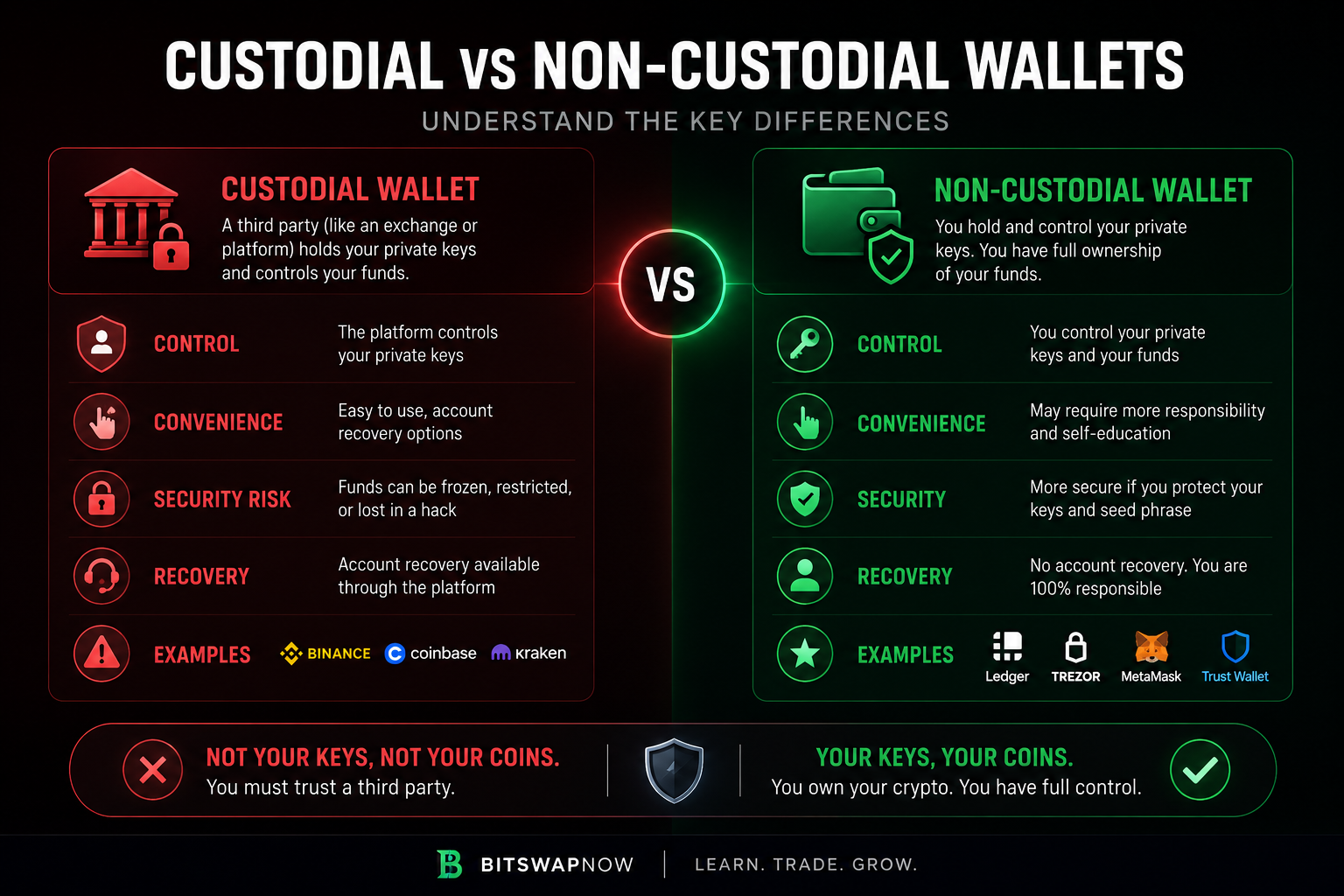
| Feature | Custodial Wallet | Non-Custodial Wallet |
|---|---|---|
| You control keys | No | Yes |
| Exchange controls funds | Yes | No |
| Requires trust in third party | Yes | No |
| Account recovery possible | Usually | Only with seed phrase |
| Better for self-custody | No | Yes |
| Risk of exchange freezes | Higher | Lower |
Examples of custodial platforms include centralized exchanges where the company stores user funds.
Examples of non-custodial wallets include:
- MetaMask
- Trust Wallet
- Exodus
- Phantom
- Ledger
- Trezor
Why Are Non-Custodial Wallets Important?
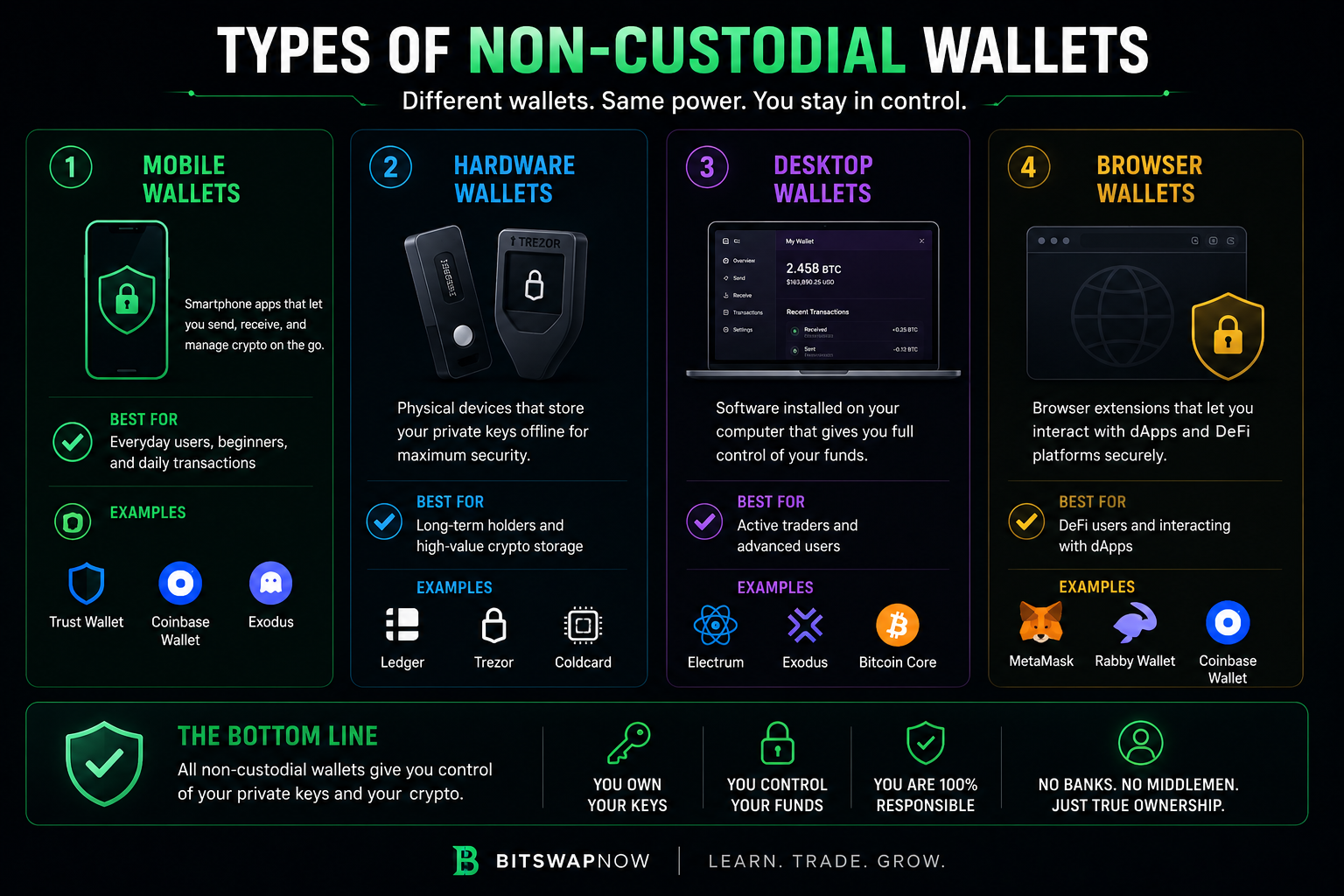
Non-custodial wallets are important because they allow users to fully participate in decentralized finance (DeFi) and blockchain ecosystems without relying on centralized intermediaries.
Benefits include:
Full Ownership
You maintain complete control over your crypto assets.
Better Privacy
Most non-custodial wallets do not require identity verification or personal information.
DeFi Access
You can connect directly to:
- decentralized exchanges
- NFT marketplaces
- staking platforms
- blockchain applications
Reduced Counterparty Risk
Your funds are not dependent on an exchange remaining solvent or operational.
Are Non-Custodial Wallets Safe?
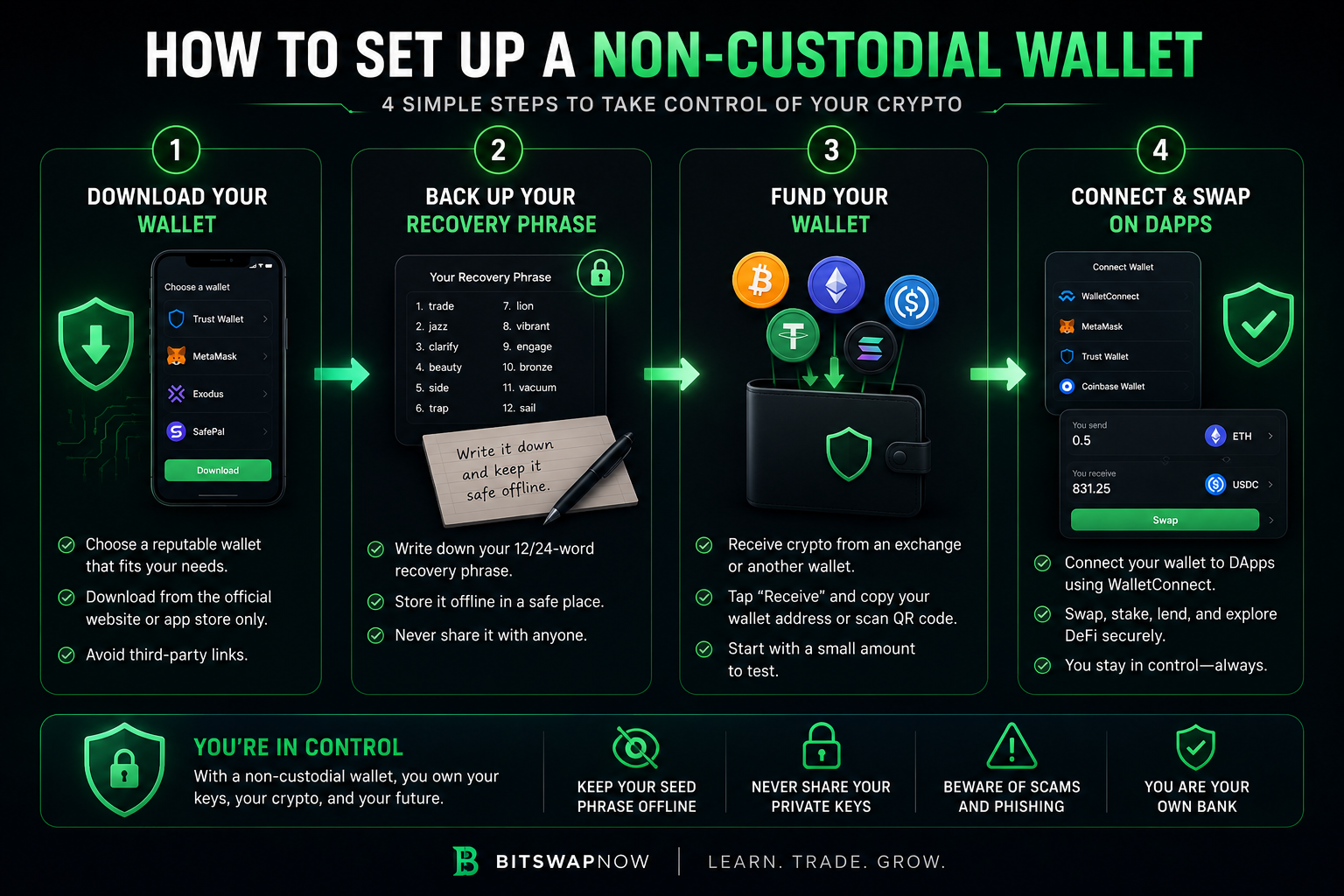
Non-custodial wallets can be extremely secure when used properly, but they also require personal responsibility.
The biggest risks are:
- losing your recovery phrase
- phishing attacks
- fake wallet apps
- malware
- poor password security
To stay safe:
Store Your Seed Phrase Offline
Never save your recovery phrase in cloud storage or screenshots.
Use Hardware Wallets for Large Holdings
Hardware wallets keep private keys offline for maximum security.
Download Wallets Only From Official Sources
Always verify wallet websites and app listings.
Enable Device Security
Use:
- strong passwords
- biometrics
- two-factor authentication where available
Best Non-Custodial Wallets in 2026
MetaMask
Popular Ethereum and EVM wallet with browser and mobile support.
Best for:
- Ethereum
- DeFi
- NFTs
Trust Wallet
Beginner-friendly mobile wallet supporting many cryptocurrencies.
Best for:
- mobile users
- multi-chain assets
Phantom
One of the leading wallets for the Solana ecosystem.
Best for:
- Solana
- NFTs
- memecoins
Ledger
Hardware wallet for long-term secure storage.
Best for:
- large crypto portfolios
- cold storage
Exodus
Simple desktop and mobile wallet with clean design.
Best for:
- beginners
- portfolio management
Can You Swap Crypto With a Non-Custodial Wallet?
Yes. Many users connect non-custodial wallets directly to crypto swap platforms and decentralized applications.
This allows users to:
- swap crypto instantly
- maintain control of their funds
- avoid storing assets on exchanges
Popular use cases include:
- swapping BTC to ETH
- converting USDT to XMR
- bridging assets across blockchains
Common Mistakes Beginners Make
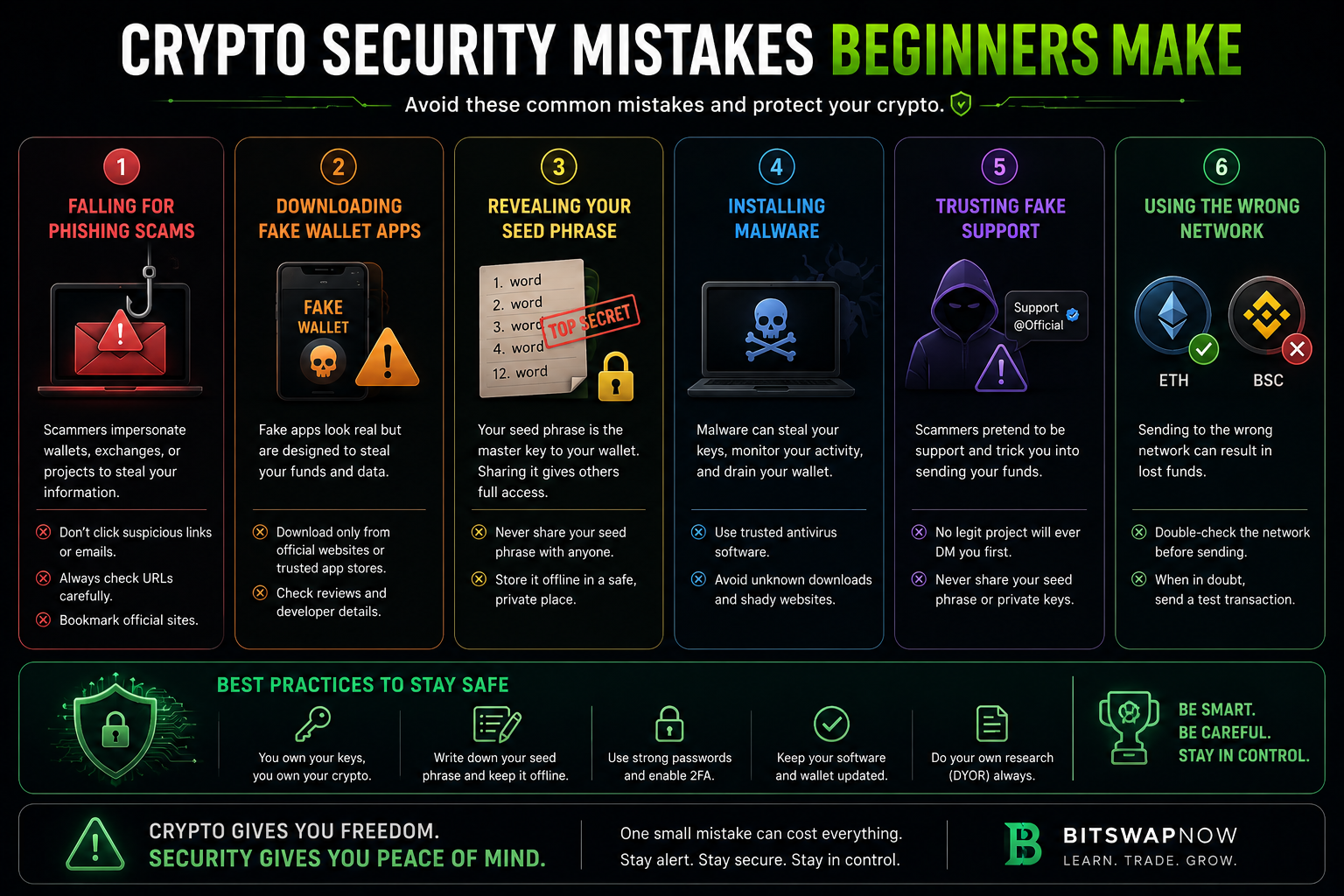
Losing the Recovery Phrase
If you lose your seed phrase, you may permanently lose access to your funds.
Storing Seed Phrases Online
Never store recovery phrases in email drafts, cloud drives, or screenshots.
Using Fake Wallet Apps
Always verify official wallet websites and app publishers.
Sending Funds to the Wrong Network
Always confirm:
- wallet address
- blockchain network
- token compatibility
Should Beginners Use a Non-Custodial Wallet?
For many crypto users, yes.
Non-custodial wallets provide:
- better ownership
- stronger privacy
- direct blockchain access
- reduced exchange risk
However, users must be comfortable managing their own security and recovery phrases.
For beginners, mobile wallets like Trust Wallet or Exodus are often good starting points.
Frequently Asked Questions
What happens if I lose my seed phrase?
If you lose both your device and recovery phrase, your funds may be unrecoverable.
Can a non-custodial wallet be hacked?
The wallet itself is usually secure, but phishing scams and malware can compromise users who do not follow proper security practices.
Are non-custodial wallets anonymous?
Most do not require identity verification, but blockchain transactions are still publicly visible.
Do I need a non-custodial wallet to use DeFi?
In most cases, yes. DeFi applications typically require direct wallet connections.
What is the safest type of wallet?
Hardware wallets are generally considered the safest option for storing large amounts of cryptocurrency.
Final Thoughts
Non-custodial wallets are one of the foundations of cryptocurrency ownership. They allow users to control their own assets, access decentralized applications, and participate directly in blockchain ecosystems without relying on centralized companies.
While self-custody requires responsibility, many crypto users believe the tradeoff is worth it for the added privacy, security, and financial freedom.
As crypto adoption continues growing in 2026, understanding how non-custodial wallets work is becoming increasingly important for every investor and blockchain user.
Related Guides
- How Crypto Swaps Work (Beginners Guide 2026)
- Best Crypto Wallets For Beginners
- How To Protect Your Crypto Wallet
- What Is a Cross Chain Swap
- Best Privacy Coins in 2026
Start your next crypto swap securely with a non-custodial wallet and maintain full control of your digital assets.
Some networks require a memo or tag when sending. Follow any memo shown on the deposit screen.
Last updated: