

Introduction
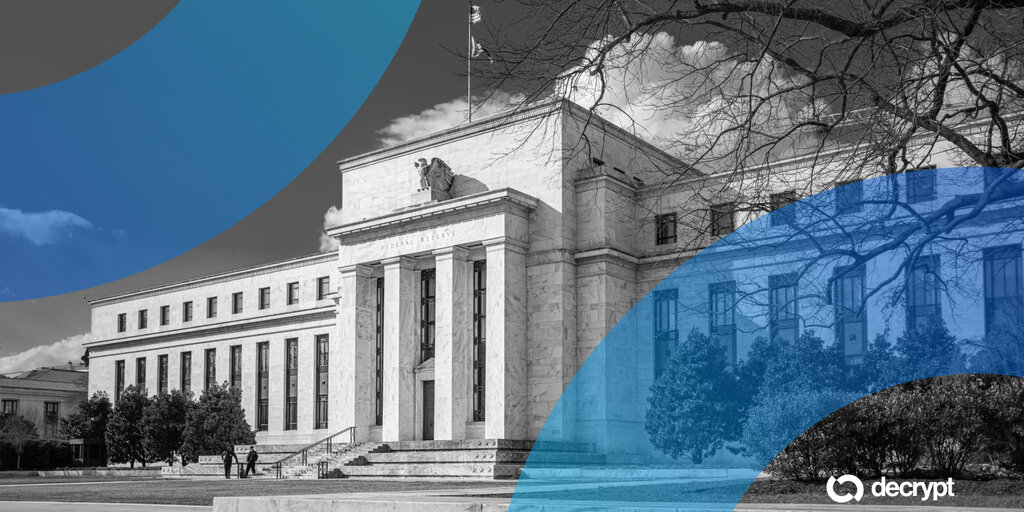
The Federal Reserve’s decision to maintain interest rates at 3.5%–3.75% on Wednesday sparked a brief but noticeable dip in both Bitcoin and Ethereum prices shortly after the announcement. This decision, which was widely anticipated by the market, comes amidst a backdrop of geopolitical tensions and dissent within the Federal Open Market Committee (FOMC). While equities experienced a sell-off in response to the decision, the crypto market’s reaction remained relatively subdued.
Main Developments
Following the Fed’s announcement, Bitcoin saw a 1% decrease, trading at $63,890, while Ethereum also dipped by around 1% to just above $1,900. This marks the fifth consecutive time that interest rates have been held steady since a 25 basis point cut in December 2025. Under the leadership of Chair Kevin Warsh, the Fed has maintained a stance of providing less forward guidance compared to previous administrations, leaving markets with fewer signals about future monetary policy.
Why This Matters
The absence of an updated Summary of Economic Projections and the lack of a new dot plot until September means that traders are left without fresh forecasts to guide their decisions. The FOMC noted that the economy is expanding at a solid pace, but inflation remains above the 2% target, partly due to rising energy prices resulting from geopolitical tensions in the Middle East. This inflationary pressure has implications for the crypto market, with nearly half of FOMC members signaling potential support for a rate hike by year-end.
Market Impact
The possibility of a rate hike before the end of the year has been looming, especially as oil prices have surged above $100 a barrel in recent weeks. This economic backdrop has kept upward pressure on prices, making a September rate hike a real possibility. Historically, changes in interest rates have had a significant impact on asset prices, with lower rates generally benefiting higher-yielding investments like crypto. Conversely, the mere threat of a rate hike can lead to downward pressure on prices.
What Crypto Traders Should Watch
Three regional Fed bank presidents—Beth Hammack of Cleveland, Neel Kashkari of Minneapolis, and Lorie Logan of Dallas—voted against holding rates and instead supported an immediate 25-basis-point hike. This dissenting bloc represents the most hawkish stance under Chair Warsh’s leadership. Additionally, the recent Iran attack and subsequent geopolitical tensions have contributed to inflation pressures, giving further credence to the arguments of those in favor of a rate hike. The next FOMC decision on September 16, 2026, will provide updated economic projections and a new dot plot, offering more clarity on the future direction of monetary policy.
Conclusion
The Federal Reserve’s decision to maintain interest rates at the current level has implications for both traditional and crypto markets. While the immediate impact on crypto prices was relatively muted, the broader economic landscape suggests that a rate hike may be on the horizon. As traders monitor key economic indicators and geopolitical developments, the potential for future rate adjustments could significantly influence the direction of asset prices, including cryptocurrencies.
FAQ
Q: Why did Bitcoin and Ethereum prices dip following the Federal Reserve’s decision to hold interest rates steady?
A: The market reaction was driven by a combination of factors, including the absence of updated rate projections and the persistent inflationary pressures, particularly related to rising energy prices resulting from geopolitical tensions.
Q: How does the Federal Reserve’s decision to maintain interest rates impact the crypto market?
A: Changes in interest rates can influence investor behavior, with lower rates historically benefiting higher-yielding investments like crypto. The looming possibility of a rate hike has the potential to exert downward pressure on prices.
Q: What should crypto traders be watching for in the coming months in relation to the Federal Reserve’s monetary policy?
A: Traders should closely monitor economic indicators, regional Fed bank presidents’ dissenting views, geopolitical developments, and the September FOMC decision for updated economic projections and insights into future rate trajectories.