


Cryptocurrency swaps have become one of the fastest and easiest ways to exchange digital assets without using traditional centralized exchanges. Instead of selling crypto for cash and rebuying another coin, users can instantly exchange one cryptocurrency for another directly through a swap platform.
In this guide, we’ll explain how crypto swaps work, what happens behind the scenes, how non-custodial swaps differ from centralized exchanges, and how to safely swap crypto in 2026.
What Is a Crypto Swap?
A crypto swap is the process of exchanging one cryptocurrency for another.
For example:
- Bitcoin (BTC) → Ethereum (ETH)
- USDT → Solana (SOL)
- XRP → Monero (XMR)
Instead of converting crypto into fiat currency first, swap platforms allow direct digital asset exchanges between blockchains and cryptocurrencies.
Crypto swaps are commonly used for:
- portfolio diversification
- accessing DeFi ecosystems
- moving between blockchains
- privacy-focused transactions
- trading volatility
- cross-chain asset movement
How Does a Crypto Swap Work?
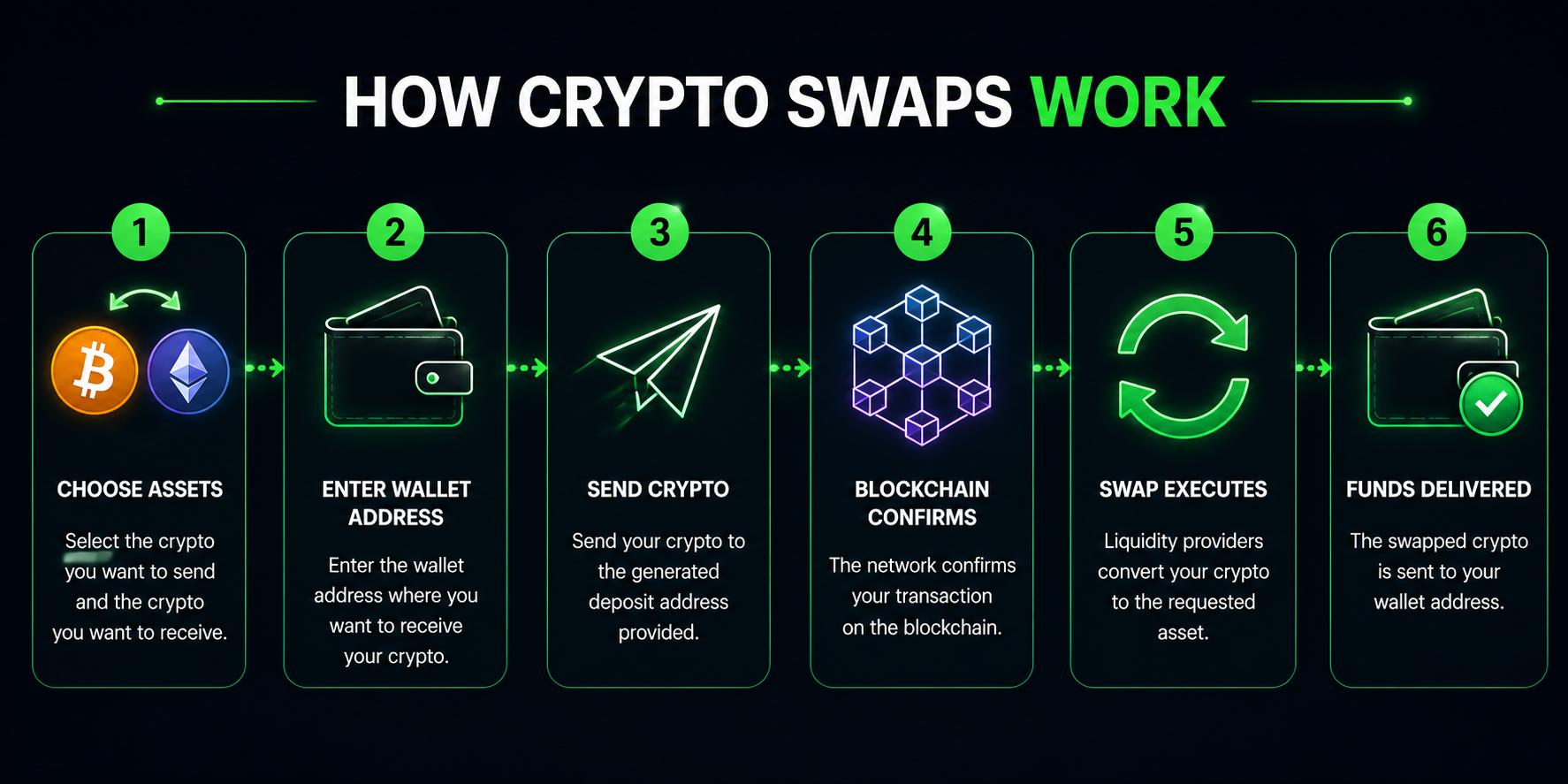
A crypto swap typically follows a simple process:
Step 1 — Select Assets
The user chooses:
- the cryptocurrency they want to send
- the cryptocurrency they want to receive
Example:
BTC → ETH
Step 2 — Enter Receiving Wallet
The user enters the wallet address where the swapped crypto should be delivered.
This is important because:
- crypto transactions are irreversible
- incorrect wallet addresses may result in permanent loss
Step 3 — Quote Generation
The swap platform calculates:
- estimated exchange rate
- network fees
- provider liquidity
- estimated received amount
Rates may fluctuate depending on:
- market volatility
- liquidity
- blockchain congestion
Step 4 — Deposit Address Creation
A temporary deposit address is generated.
The user sends crypto to this address.
Once the blockchain confirms the transaction, the swap process begins.
Step 5 — Asset Conversion
Liquidity providers or exchange systems convert the deposited asset into the requested cryptocurrency.
Depending on the swap type, this may involve:
- decentralized liquidity pools
- market makers
- centralized liquidity providers
- cross-chain bridging infrastructure
Step 6 — Delivery to Wallet
The converted cryptocurrency is sent directly to the user’s receiving wallet address.
The swap is then complete.
How Long Do Crypto Swaps Take?

Most swaps are completed within:
5–30 minutes
However, timing depends on:
- blockchain confirmation speed
- network congestion
- liquidity availability
- asset type
- provider processing
Bitcoin transactions often take longer than faster chains like Solana or Polygon.
What Is a Non-Custodial Crypto Swap?
A non-custodial swap allows users to exchange cryptocurrencies without giving up control of their wallets or private keys.
This means:
- users keep ownership of funds
- no exchange account is required
- assets are not permanently stored by the platform
Many crypto users prefer non-custodial swaps because they:
- reduce counterparty risk
- improve privacy
- avoid exchange account freezes
- simplify transactions
Custodial vs Non-Custodial Swaps
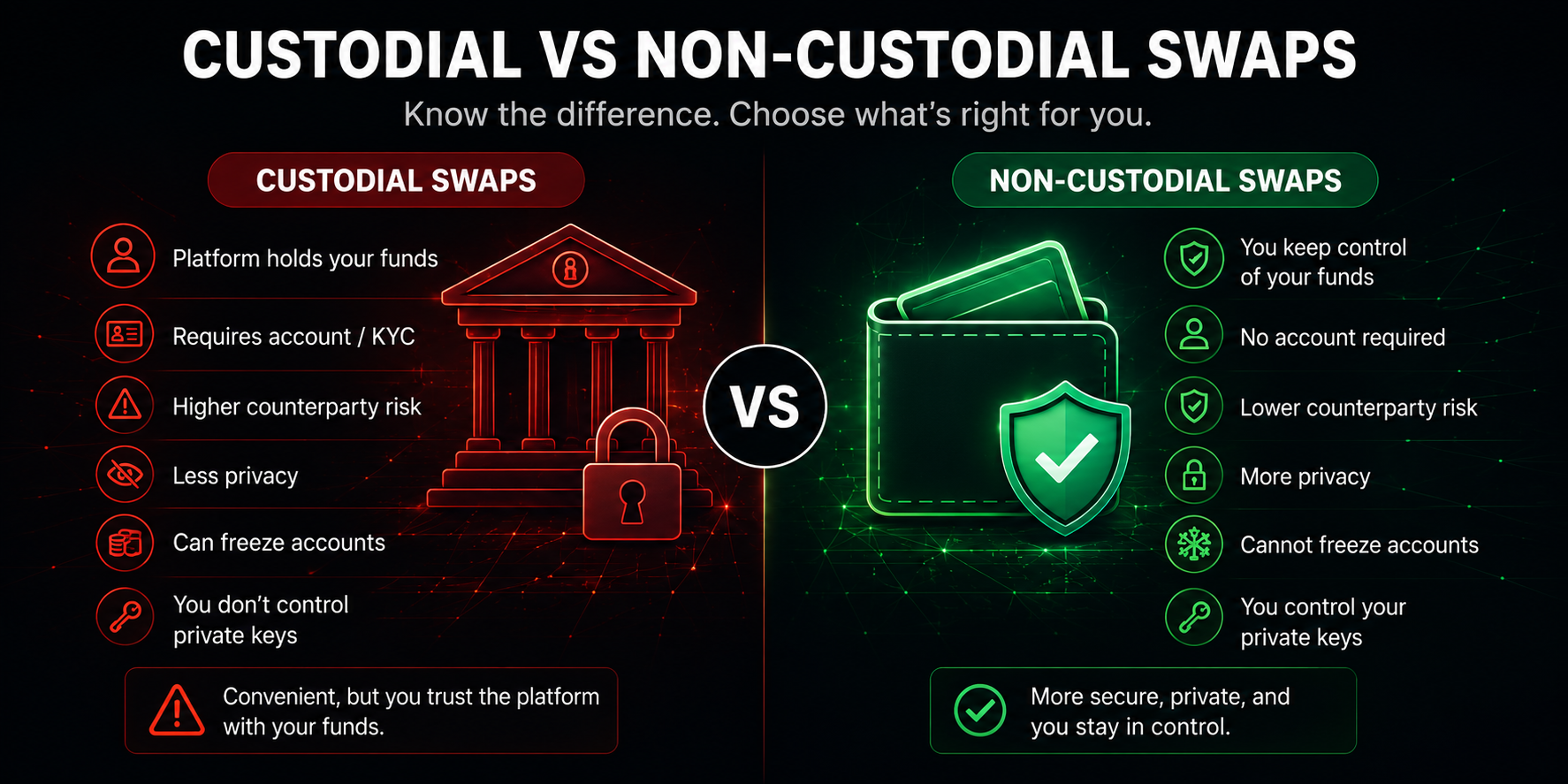
| Feature | Custodial Swap | Non-Custodial Swap |
|---|---|---|
| User controls wallet | No | Yes |
| Requires exchange account | Usually | Often no |
| Funds held by platform | Yes | No |
| Higher privacy | No | Yes |
| Risk of frozen accounts | Higher | Lower |
| Access to DeFi | Limited | Better |
What Are Cross-Chain Swaps?
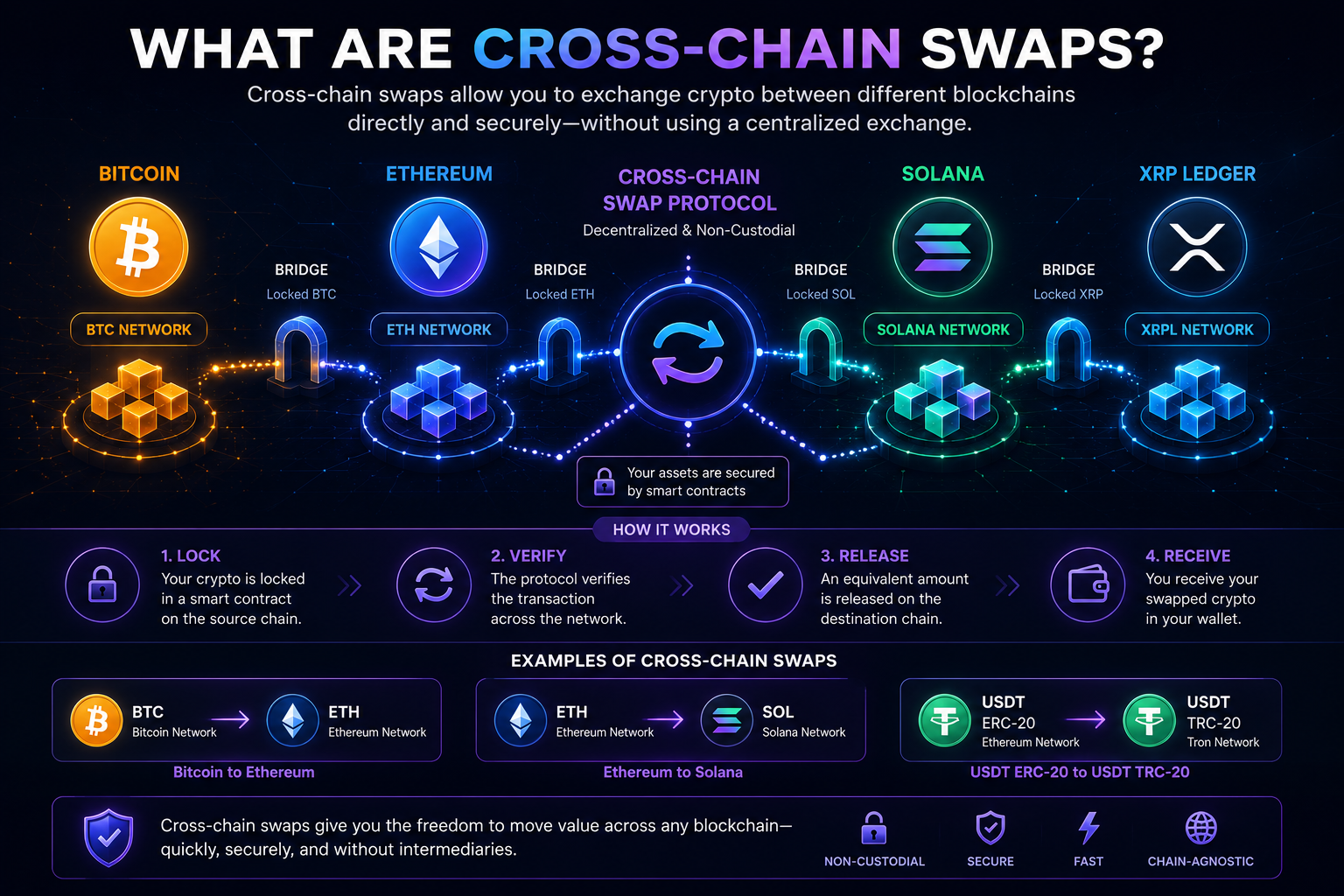
Cross-chain swaps allow users to exchange assets between different blockchain networks.
Example:
Bitcoin → Solana
Ethereum → XRP
USDT (ERC20) → USDT (TRC20)
Cross-chain swaps are important because blockchains operate independently and normally cannot communicate directly without specialized infrastructure.
Modern swap platforms use:
- bridges
- liquidity providers
- wrapped assets
- routing systems
to facilitate these exchanges.
What Fees Are Included in Crypto Swaps?
Crypto swaps may include:
Blockchain Network Fees
Paid to blockchain validators or miners.
Exchange Rate Spread
Difference between market rate and quoted rate.
Liquidity Provider Fees
Fees charged by swap providers or routing systems.
Slippage
Price movement during transaction execution.
Always review:
- estimated received amount
- network used
- final quote
before confirming a swap.
Are Crypto Swaps Safe?
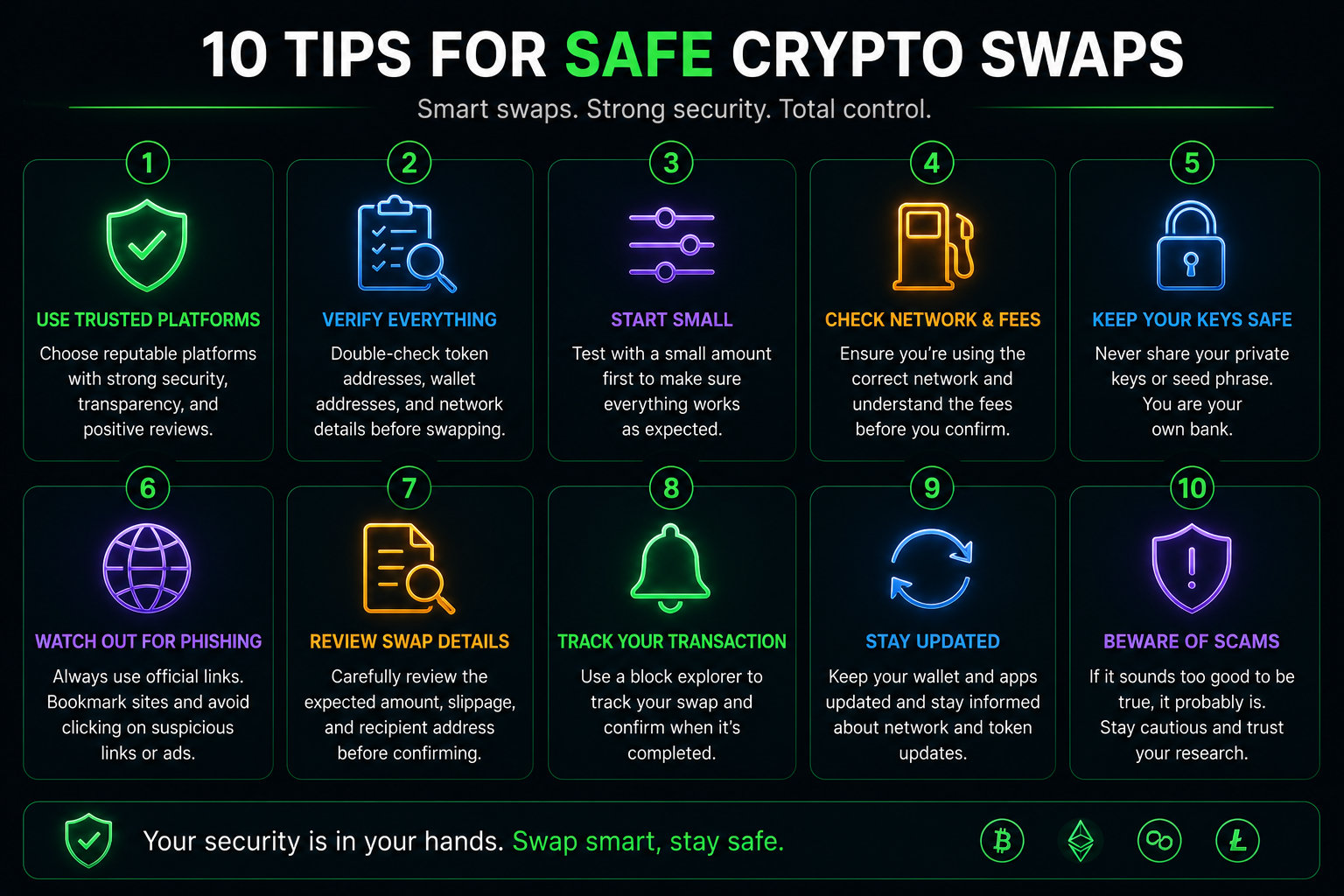
Crypto swaps can be safe when using reputable platforms and following proper security practices.
Users should:
- verify wallet addresses carefully
- avoid fake swap websites
- double-check blockchain networks
- never share recovery phrases
- confirm URLs before connecting wallets
The biggest risks usually involve:
- phishing scams
- sending funds to incorrect networks
- fake wallet applications
- malicious browser extensions
Common Crypto Swap Mistakes
Sending Funds to the Wrong Blockchain
One of the most common and costly mistakes.
Always verify:
- wallet compatibility
- blockchain network
- token standards
Using Incorrect Wallet Addresses
Crypto transactions cannot usually be reversed.
Always double-check the destination address.
Ignoring Network Fees
Some networks have higher fees during congestion.
Falling for Fake Swap Platforms
Scammers frequently create fake exchange websites.
Always verify:
- domain names
- SSL certificates
- official URLs
Why Are Crypto Swaps Popular?
Crypto swaps have become extremely popular because they offer:
- convenience
- speed
- direct asset conversion
- non-custodial options
- global accessibility
- simplified crypto trading
They also eliminate much of the complexity associated with:
- centralized exchange accounts
- order books
- fiat withdrawals
- lengthy verification processes
Best Practices for Crypto Swaps
Use Trusted Wallets
Popular non-custodial wallets include:
- MetaMask
- Trust Wallet
- Phantom
- Ledger
- Exodus
Verify Blockchain Networks
Always confirm:
- ERC20
- BEP20
- TRC20
- Solana
- Polygon
- Bitcoin
before sending funds.
Start With Small Test Transactions
Especially when using a new wallet or blockchain.
Save Transaction IDs
Transaction hashes help track swap status and troubleshoot delays.
Frequently Asked Questions
Are crypto swaps taxable?
In many jurisdictions, crypto-to-crypto swaps may be considered taxable events. Users should consult local tax professionals regarding digital asset reporting obligations.
Can crypto swaps be reversed?
No. Blockchain transactions are generally irreversible once confirmed.
Do crypto swaps require KYC?
Some swaps may not require identity verification, but certain transactions may trigger compliance checks depending on risk factors, provider requirements, or regulatory obligations.
What happens if a swap is delayed?
Delays may occur due to:
- network congestion
- low liquidity
- blockchain confirmation times
- compliance reviews
What is slippage?
Slippage refers to price movement between the quoted rate and final execution price during volatile market conditions.
Final Thoughts
Crypto swaps have transformed how users exchange digital assets by making cross-chain transactions faster, easier, and more accessible than ever before.
Whether you are converting Bitcoin to Ethereum, moving assets between blockchains, or accessing DeFi ecosystems, understanding how crypto swaps work is essential for safely navigating the cryptocurrency market in 2026.
As non-custodial infrastructure continues evolving, crypto swaps are likely to become one of the core foundations of the decentralized financial ecosystem.
Related Guides
- What Is a Non-Custodial Wallet?
- How To Swap Crypto Without KYC
- Best Crypto Wallets For Beginners
- What Is Blockchain Technology?
- How To Avoid Crypto Scams
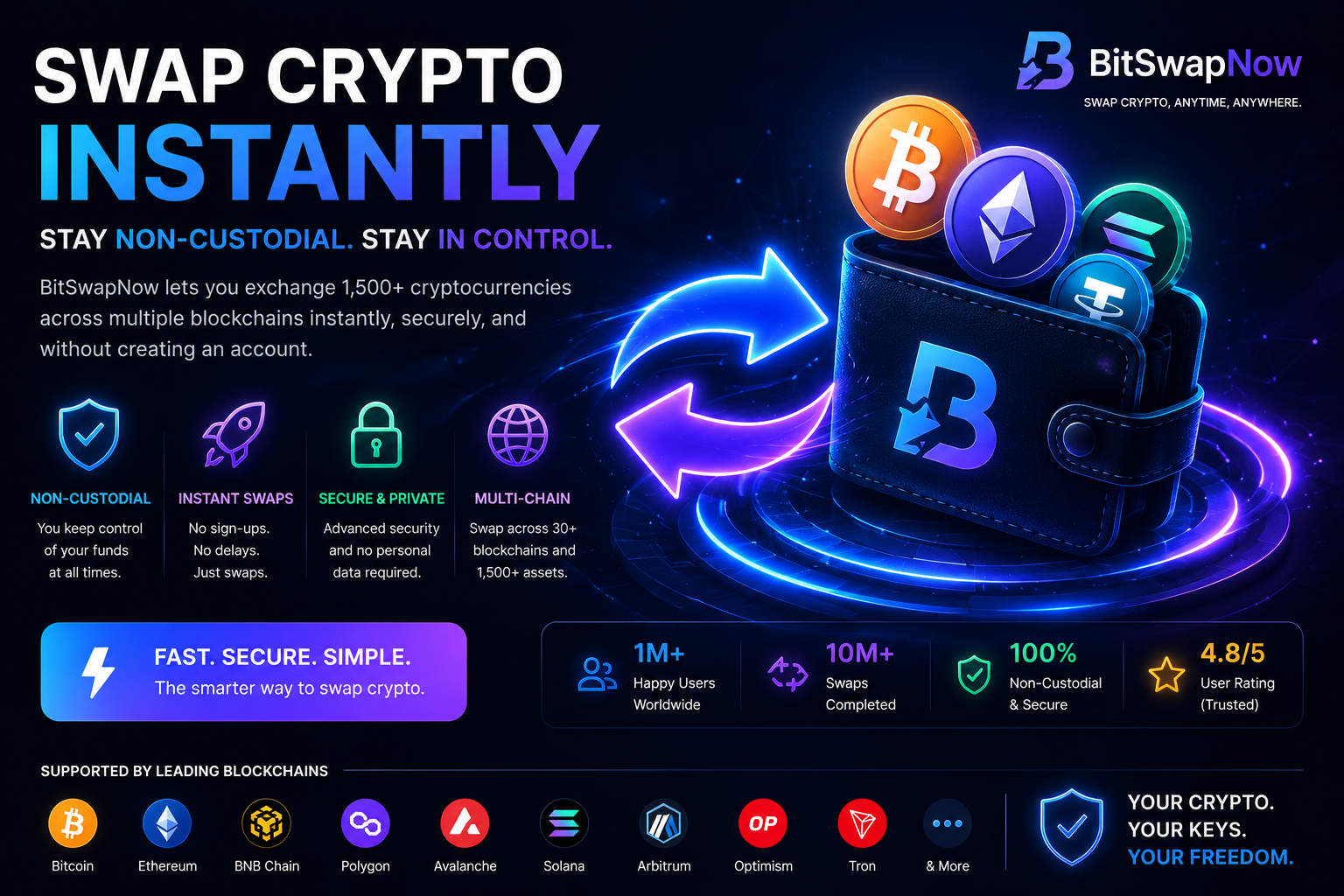
Start your next crypto swap securely with BitSwapNow and maintain full control of your digital assets.
Some networks require a memo or tag when sending. Follow any memo shown on the deposit screen.
Last updated: