



Cryptocurrency has transformed the financial world by giving users direct control over their money, but that freedom also comes with responsibility. Unlike traditional banking systems, crypto transactions are generally irreversible. Once funds are sent to the wrong wallet or stolen through a scam, recovering them is often impossible.
As Bitcoin, Ethereum, Monero, Solana, stablecoins, and decentralized finance continue growing in popularity, crypto scams are becoming more sophisticated every year. Cybercriminals are no longer relying on simple phishing emails alone. Today’s attackers use cloned websites, malicious smart contracts, fake support accounts, wallet drainers, social engineering tactics, and even AI-generated impersonation scams to target unsuspecting users.
In 2026, crypto security education is no longer optional — it is one of the most important skills every investor, trader, and Web3 user needs to understand.
This guide explains the most common cryptocurrency scams users encounter today, how these attacks work, and the best ways to protect your digital assets while using wallets, exchanges, DeFi platforms, and instant crypto swap services like BitSwapNow.
Why Crypto Scams Continue to Rise
The cryptocurrency industry moves incredibly fast. New blockchains, tokens, wallets, and decentralized applications launch almost daily. While innovation creates opportunity, it also creates confusion — and scammers take advantage of that confusion aggressively.
Unlike traditional financial institutions, decentralized systems do not typically have fraud departments or customer protection mechanisms. Blockchain transactions are permanent by design. If a user mistakenly sends Bitcoin to a scammer or signs a malicious wallet approval transaction, there is usually no reversal process available.
At the same time, millions of newer users continue entering crypto every year without fully understanding:
- blockchain networks,
- wallet security,
- token approvals,
- smart contract risks,
- or how cross-chain transactions function.
This combination of irreversible transactions and inexperienced users has made cryptocurrency one of the most attractive industries for online fraud.
Phishing Websites Are More Convincing Than Ever
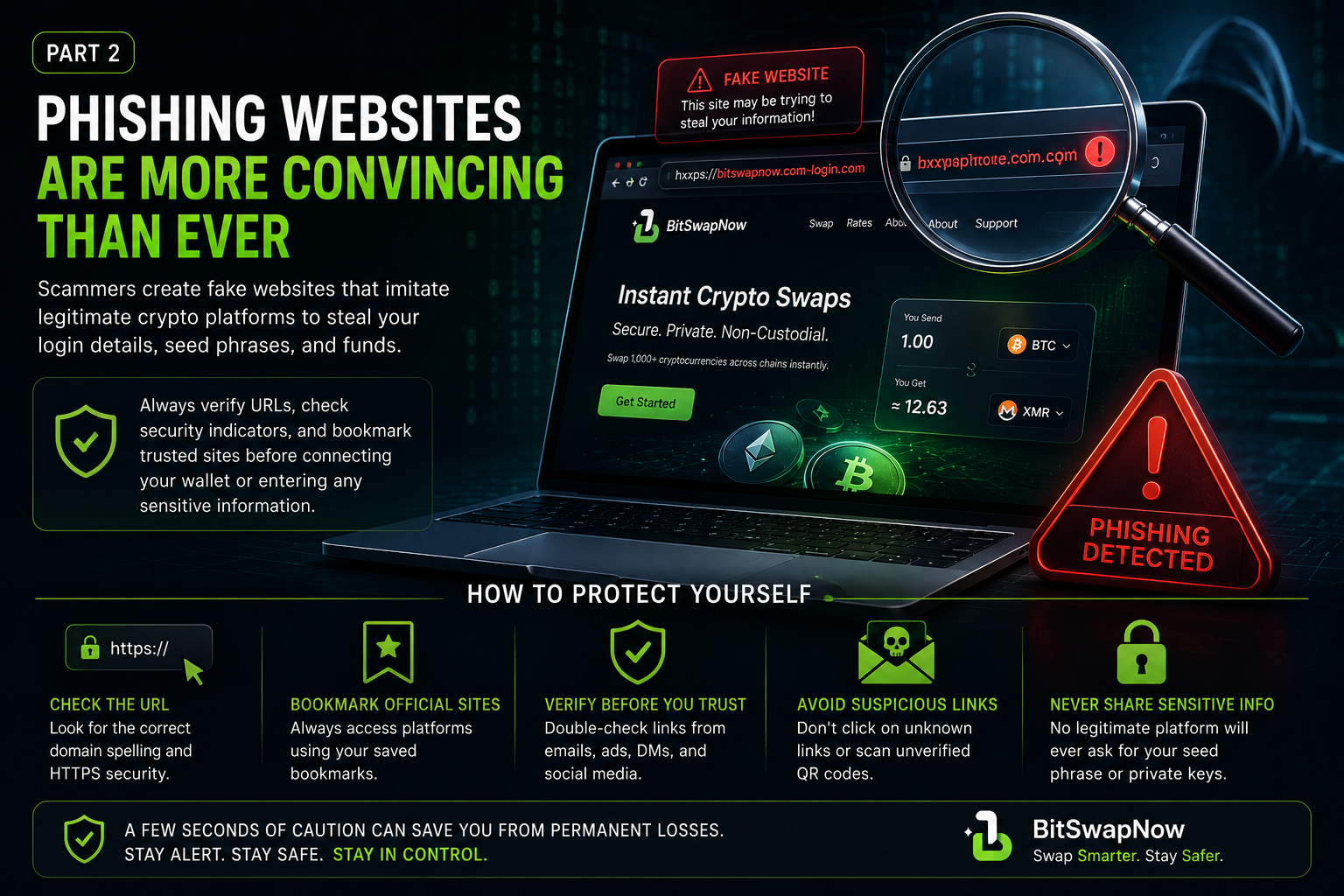
One of the most common crypto scams involves fake websites impersonating legitimate platforms. Attackers often clone the appearance of:
- exchanges,
- wallet providers,
- NFT marketplaces,
- DeFi protocols,
- or crypto swap services.
In many cases, the fake site looks nearly identical to the original.
Users may receive links through:
- X/Twitter replies,
- Telegram groups,
- Discord messages,
- sponsored ads,
- fake YouTube livestreams,
- or phishing emails pretending to be official support teams.
The goal is simple: trick users into entering private information or connecting their wallets.
Sometimes scammers attempt to steal:
- login credentials,
- seed phrases,
- wallet permissions,
- or direct crypto deposits.
Other times, malicious sites quietly inject harmful smart contract approvals into wallet prompts.
Because of this, users should always verify URLs carefully before interacting with any crypto platform.
For example, users looking to perform instant crypto swaps should always ensure they are using the official:
BitSwapNow Website
instead of clicking random links from social media comments or direct messages.
Bookmarking trusted websites is one of the simplest but most effective security habits users can adopt.
Wallet Drainer Scams Have Become a Massive Threat
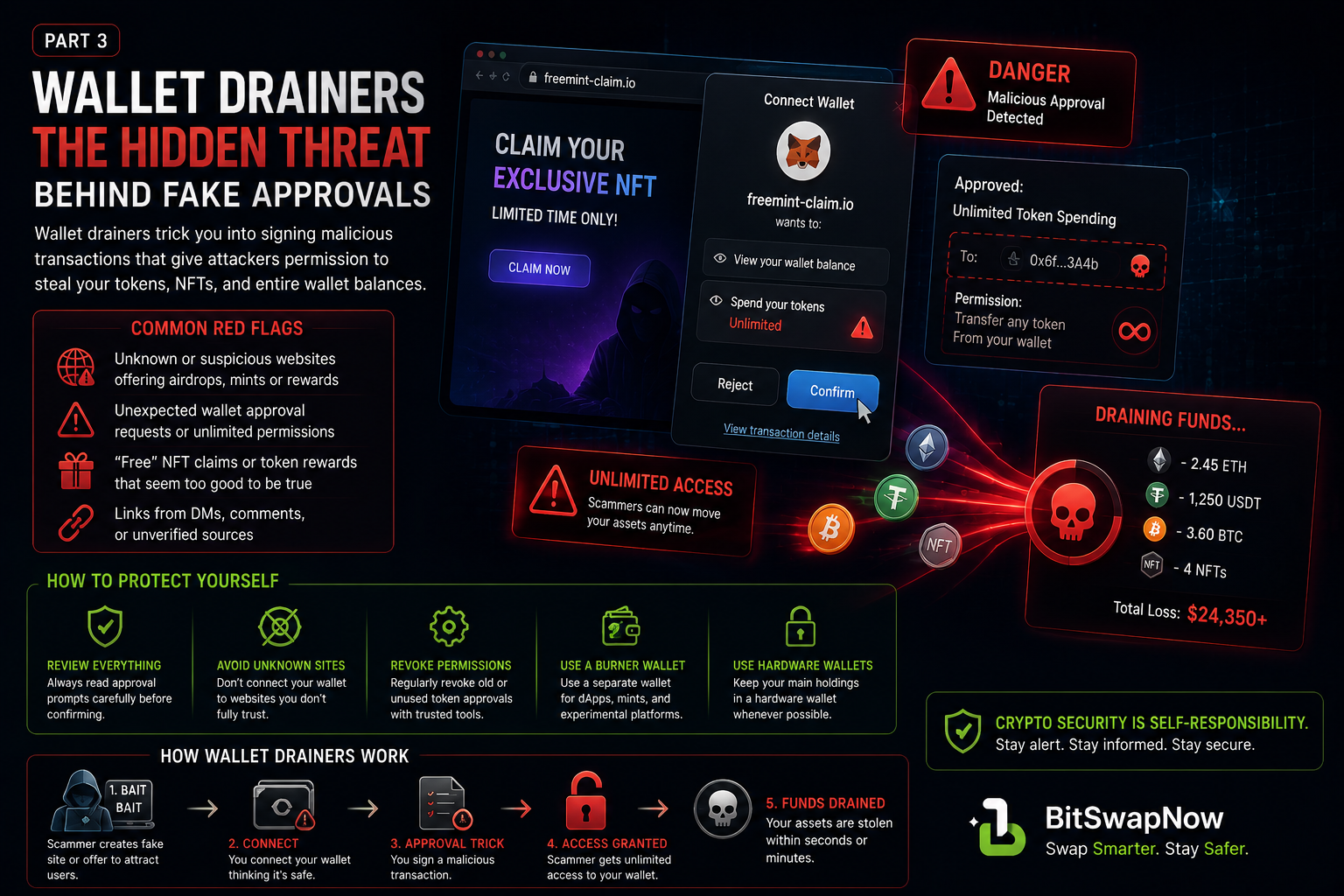
Wallet drainers have emerged as one of the fastest-growing threats in crypto over the past several years. These attacks typically involve malicious websites designed to trick users into signing dangerous wallet approvals.
Unlike traditional phishing attacks that steal passwords directly, wallet drainers exploit wallet permissions and smart contract interactions.
Many attacks disguise themselves as:
- free NFT mints,
- fake airdrops,
- token claim pages,
- early access registrations,
- or “exclusive” Web3 opportunities.
A user may think they are approving a harmless transaction, while in reality they are granting permission for attackers to transfer assets directly from the wallet.
Some drainers target:
- ERC20 tokens,
- NFTs,
- stablecoins,
- or even entire wallet balances.
These attacks have become increasingly sophisticated and often use professional-looking interfaces that appear legitimate at first glance.
To reduce risk:
- avoid connecting wallets to unknown websites,
- use burner wallets for experimental projects,
- regularly revoke unused token approvals,
- and store long-term holdings in hardware wallets whenever possible.
Social Engineering Is Often More Dangerous Than Malware
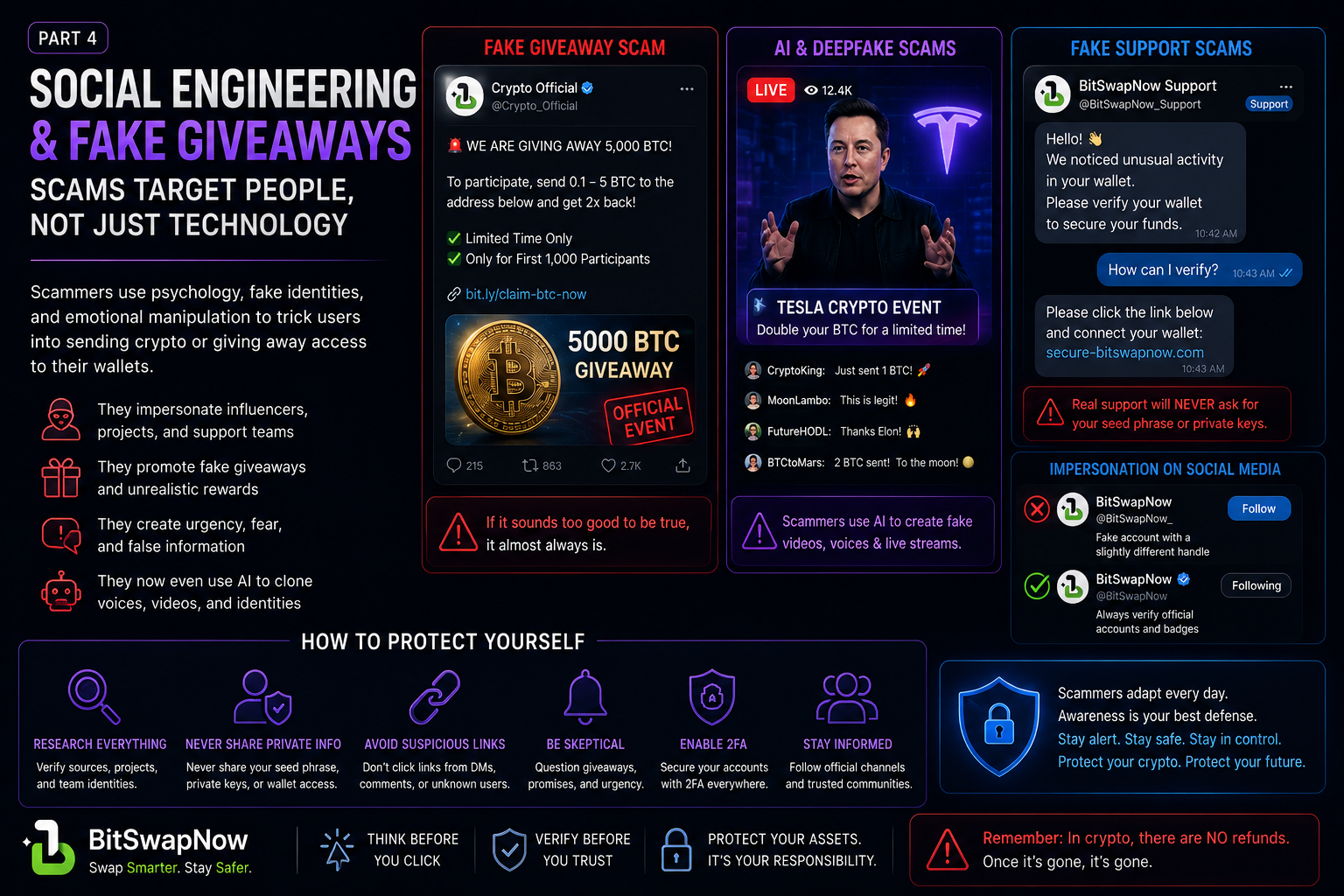
One of the most overlooked aspects of crypto security is social engineering.
Many scams succeed not because hackers break encryption, but because they manipulate human emotions.
Scammers commonly create urgency using phrases like:
- “Your wallet has been compromised!”
- “Act immediately to secure your funds!”
- “Limited-time investment opportunity!”
- “Your account is under investigation!”
Fear and greed remain the two biggest emotional drivers behind most crypto scams.
Attackers may impersonate:
- exchange support agents,
- influencers,
- moderators,
- crypto projects,
- or even friends whose accounts were compromised.
On platforms like Telegram and Discord, fake support accounts are extremely common. A user asks a public question, and within minutes receives a direct message from a scammer pretending to offer help.
Legitimate crypto companies will never ask for:
- seed phrases,
- private keys,
- or direct wallet access.
Understanding this single rule can prevent many catastrophic losses.
Fake Giveaways and AI-Generated Scams Are Increasing
As AI tools become more advanced, scammers are beginning to use:
- AI-generated videos,
- cloned voices,
- fake livestreams,
- and impersonation content
to trick users into believing fraudulent promotions are legitimate.
One increasingly common scam involves fake “live” streams featuring deepfake videos of crypto influencers or executives promising to double Bitcoin deposits.
Another tactic involves impersonation accounts on X/Twitter using nearly identical usernames and stolen profile images.
Users should remain extremely skeptical of:
- guaranteed profits,
- unrealistic returns,
- or “send crypto first” promotions.
If something sounds too good to be true in crypto, it almost always is.
Sending Crypto on the Wrong Network Still Causes Massive Losses
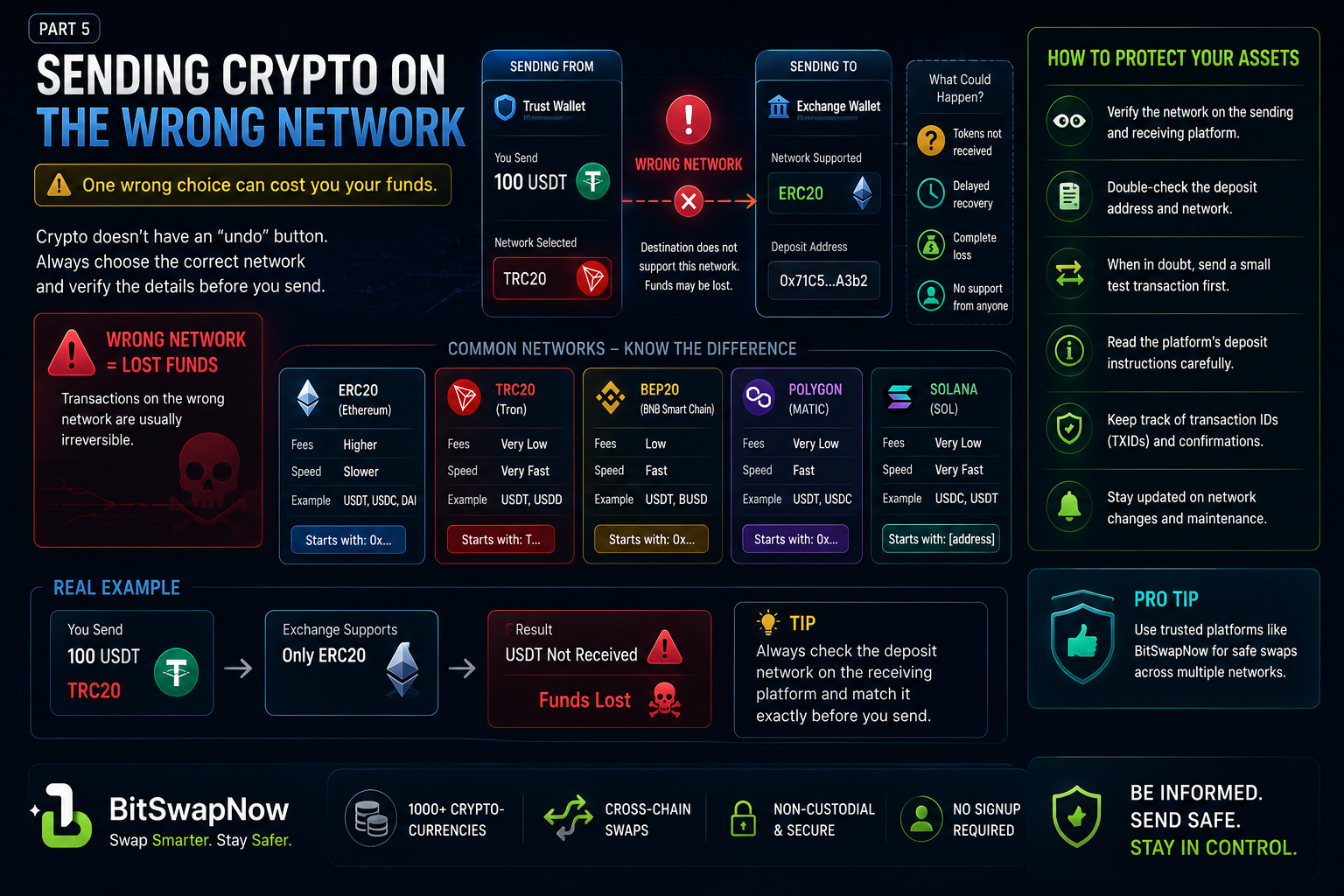
One of the most common mistakes in cryptocurrency is sending assets using the wrong blockchain network.
Stablecoins such as USDT and USDC now exist across multiple chains including:
- Ethereum (ERC20),
- Tron (TRC20),
- BNB Smart Chain (BEP20),
- Solana,
- Arbitrum,
- Polygon,
- and Avalanche.
Newer users often assume all versions are interchangeable when they are not.
Sending ERC20 USDT to a TRC20-only wallet can result in inaccessible funds or complicated recovery processes.
This growing complexity is one reason cross-chain swap platforms have become increasingly popular.
Services such as BitSwapNow help users convert assets between blockchain networks more safely while simplifying cross-chain swaps and stablecoin network compatibility.
Educational resources like:
Crypto Security Guides
also help users better understand:
- blockchain compatibility,
- secure wallet practices,
- and network differences.
Rug Pulls and Fake Crypto Projects Continue to Evolve
Not every scam targets wallets directly. Some scams operate through entire fake crypto projects.
Rug pulls typically involve developers launching tokens, generating hype, attracting liquidity, and then abandoning the project while taking investor funds.
These scams often rely heavily on:
- influencer marketing,
- fake partnerships,
- paid hype campaigns,
- unrealistic roadmaps,
- and aggressive promises of guaranteed returns.
Users should carefully research projects before investing and remain cautious around:
- anonymous development teams,
- unverifiable partnerships,
- copied whitepapers,
- and communities that suppress criticism.
Legitimate projects generally welcome transparency and technical discussion.
Seed Phrase Security Remains Critical
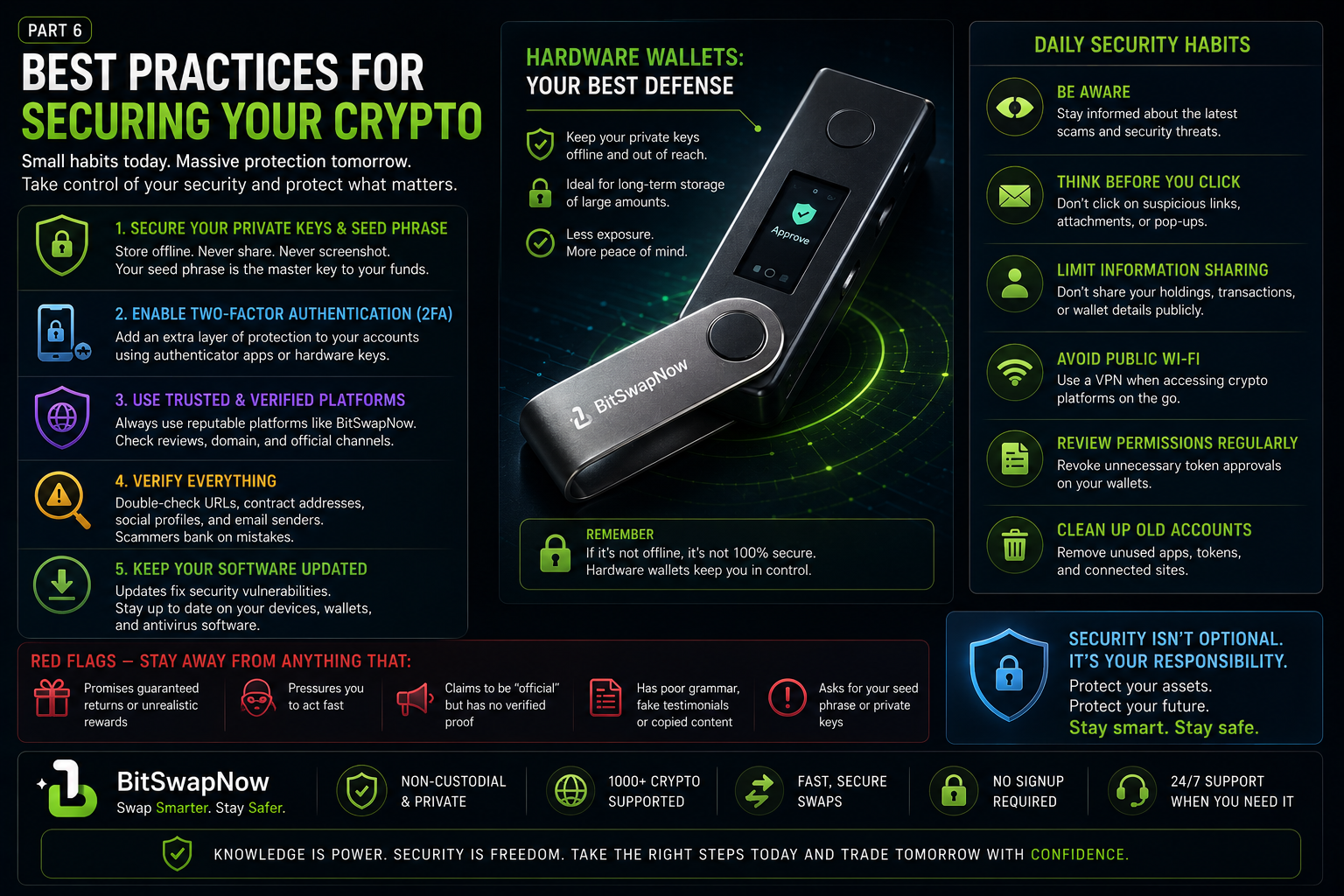
A crypto wallet’s seed phrase is effectively the master key to all associated assets.
Anyone who obtains that phrase can usually access the wallet permanently.
Despite constant warnings across the industry, seed phrase theft remains one of the largest causes of crypto losses worldwide.
Users should never:
- upload seed phrases online,
- store them in screenshots,
- send them through messaging apps,
- or enter them into websites claiming to provide “wallet verification.”
A legitimate wallet provider, exchange, or swap platform does not need access to a user’s seed phrase.
The safest approach is storing seed phrases:
- offline,
- securely,
- and preferably in multiple protected physical locations.
The Importance of Long-Term Crypto Security Habits
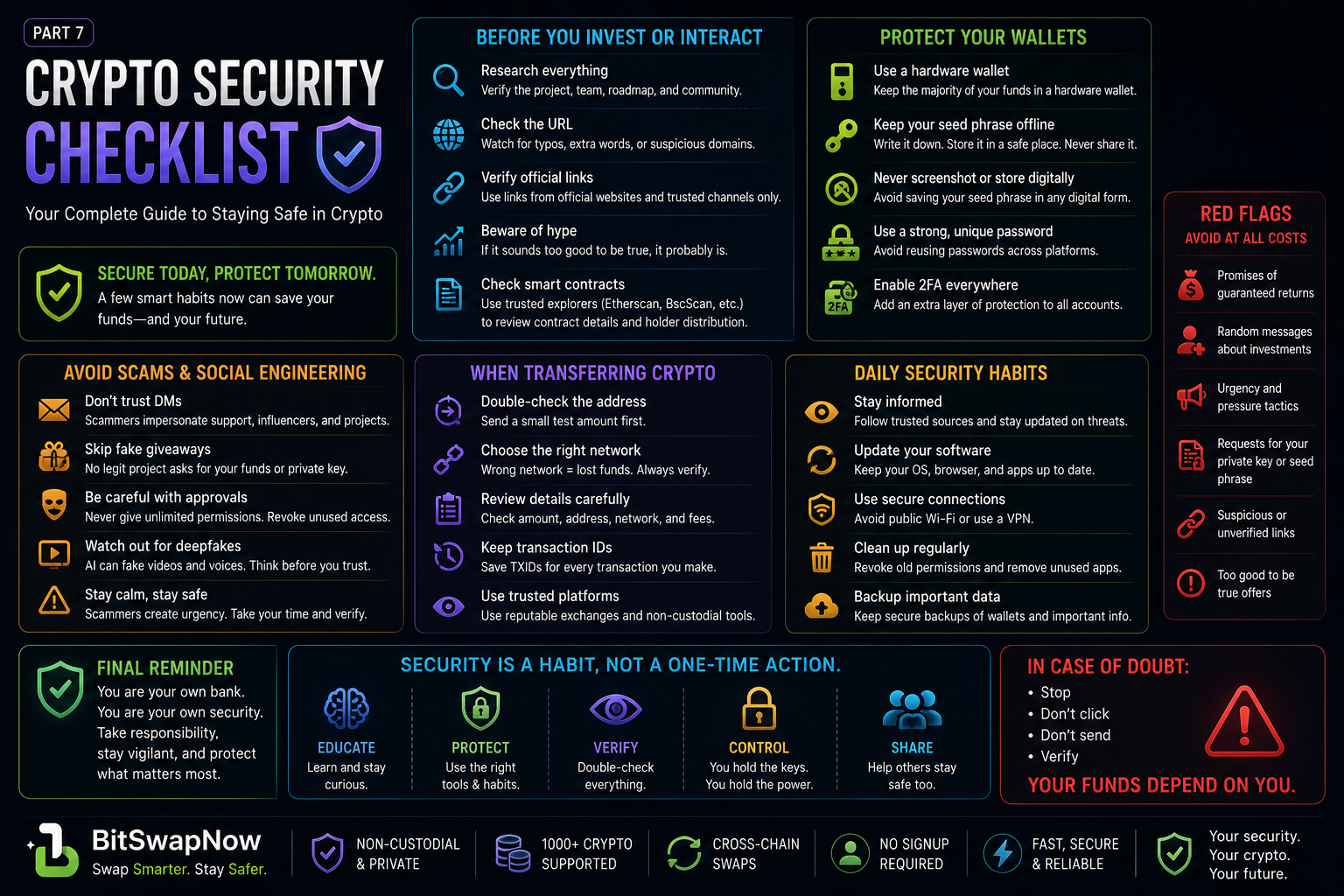
Crypto security is not a one-time setup process. It requires ongoing awareness and disciplined habits.
Users serious about protecting their digital assets should:
- use hardware wallets,
- enable two-factor authentication,
- separate trading wallets from long-term storage,
- verify wallet addresses carefully,
- and stay informed about emerging scams.
The cryptocurrency industry evolves rapidly, and scammers constantly adapt their tactics alongside new technologies.
Security awareness itself has become one of the most valuable skills in Web3.
Why Education Matters More Than Ever
Many crypto scams succeed because users rush transactions or trust the wrong sources.
Education dramatically reduces risk.
Understanding:
- how blockchain networks work,
- how wallet permissions function,
- how phishing attacks operate,
- and how cross-chain swaps work
can prevent many of the most common mistakes users make.
As the industry grows, platforms that focus on both utility and education will likely become increasingly important.
That includes crypto resources dedicated to:
- wallet safety,
- blockchain compatibility,
- cross-chain swaps,
- and secure self-custody practices.
Final Thoughts
Cryptocurrency offers financial freedom and decentralized ownership, but it also places more responsibility directly on users.
Unlike traditional banking systems, there is often no customer support line capable of reversing blockchain transactions after funds are lost.
The good news is that most crypto scams are preventable with proper awareness and strong security habits.
By:
- verifying URLs carefully,
- avoiding emotional decision-making,
- understanding blockchain networks,
- and using trusted platforms,
users can dramatically reduce their risk while participating safely in the growing crypto economy.
As crypto adoption accelerates worldwide, education and security awareness will remain some of the most important tools any investor or trader can have.
Last updated: