



Blockchain technology has become one of the most discussed innovations of the digital era. It powers cryptocurrencies like Bitcoin and Ethereum, supports decentralized finance (DeFi), enables NFTs, and is reshaping how digital assets move across the internet.
Despite its rapid growth, blockchain technology still feels confusing to many new users.
Terms like:
- blockchain,
- decentralized networks,
- wallets,
- smart contracts,
- mining,
- and cross-chain swaps
are often discussed without proper explanation.
This guide breaks down blockchain basics in a simple and practical way while explaining how blockchain networks actually work, why they matter, and how users interact with cryptocurrencies safely in 2026.
What Is a Blockchain?
At its core, a blockchain is a digital ledger that records transactions across a distributed network of computers.
Instead of relying on a single centralized authority like a bank or payment processor, blockchain networks distribute transaction records across thousands of independent participants worldwide.
Every transaction added to the blockchain becomes part of a permanent and transparent record.
These records are grouped into “blocks,” and each block connects to the previous one — forming a continuous chain of data. This is where the term “blockchain” comes from.
Because the ledger is distributed across many computers, altering historical transaction data becomes extremely difficult.
This structure creates:
- transparency,
- security,
- decentralization,
- and resistance to censorship.
Why Blockchain Technology Matters
Traditional financial systems depend heavily on intermediaries such as:
- banks,
- payment processors,
- clearing houses,
- and centralized institutions.
Blockchain technology allows value to move directly between users without requiring centralized control.
This creates several advantages:
- faster global transactions,
- reduced dependence on intermediaries,
- increased financial accessibility,
- and greater user ownership over digital assets.
Blockchain systems also operate continuously, unlike traditional banking systems that may have regional restrictions or limited operating hours.
As a result, blockchain technology has expanded far beyond simple payments and now supports:
- decentralized finance (DeFi),
- NFTs,
- stablecoins,
- gaming ecosystems,
- smart contracts,
- and cross-chain infrastructure.
How Blockchain Transactions Work
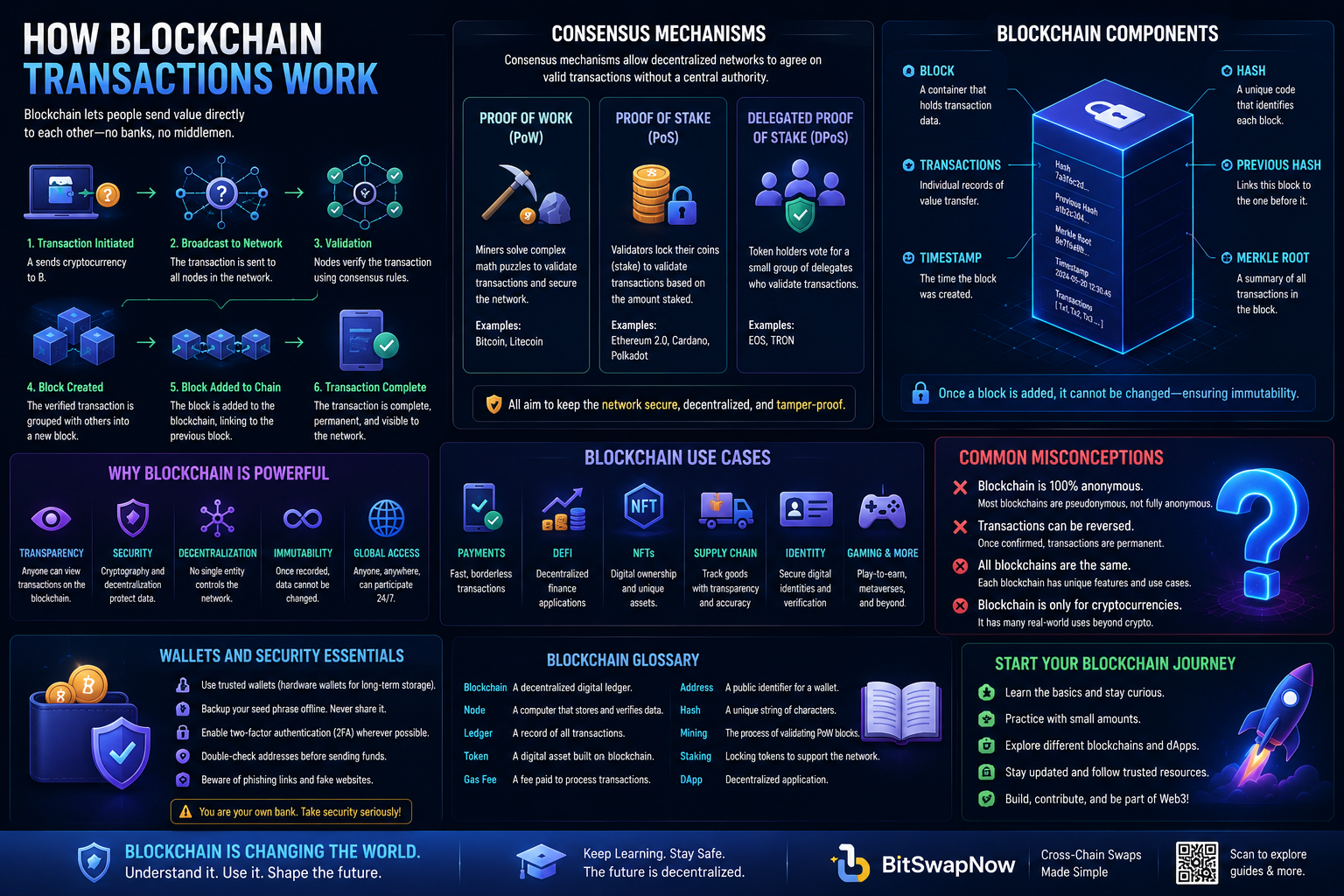
When someone sends cryptocurrency, the transaction is broadcast to the blockchain network.
Network participants then verify the transaction using consensus mechanisms designed to maintain network security and accuracy.
Once verified, the transaction is added to a new block on the blockchain.
After confirmation:
- the transaction becomes publicly recorded,
- balances update,
- and the recipient receives the funds.
Different blockchains process transactions differently.
For example:
- Bitcoin prioritizes security and decentralization,
- Ethereum supports programmable smart contracts,
- Solana focuses on speed and scalability,
- while Monero emphasizes transactional privacy.
Each blockchain ecosystem is designed with different tradeoffs and use cases in mind.
What Makes Blockchain Decentralized?
One of blockchain’s most important characteristics is decentralization.
Traditional systems often rely on a single authority controlling:
- transaction approval,
- databases,
- and account management.
Blockchain networks distribute these responsibilities across many independent nodes.
A node is simply a computer participating in the blockchain network.
Because thousands of nodes may store identical blockchain data, no single entity controls the system entirely.
This decentralized structure helps improve:
- resilience,
- censorship resistance,
- and network reliability.
It also makes blockchain systems significantly harder to manipulate compared to centralized databases.
Understanding Cryptocurrency Wallets
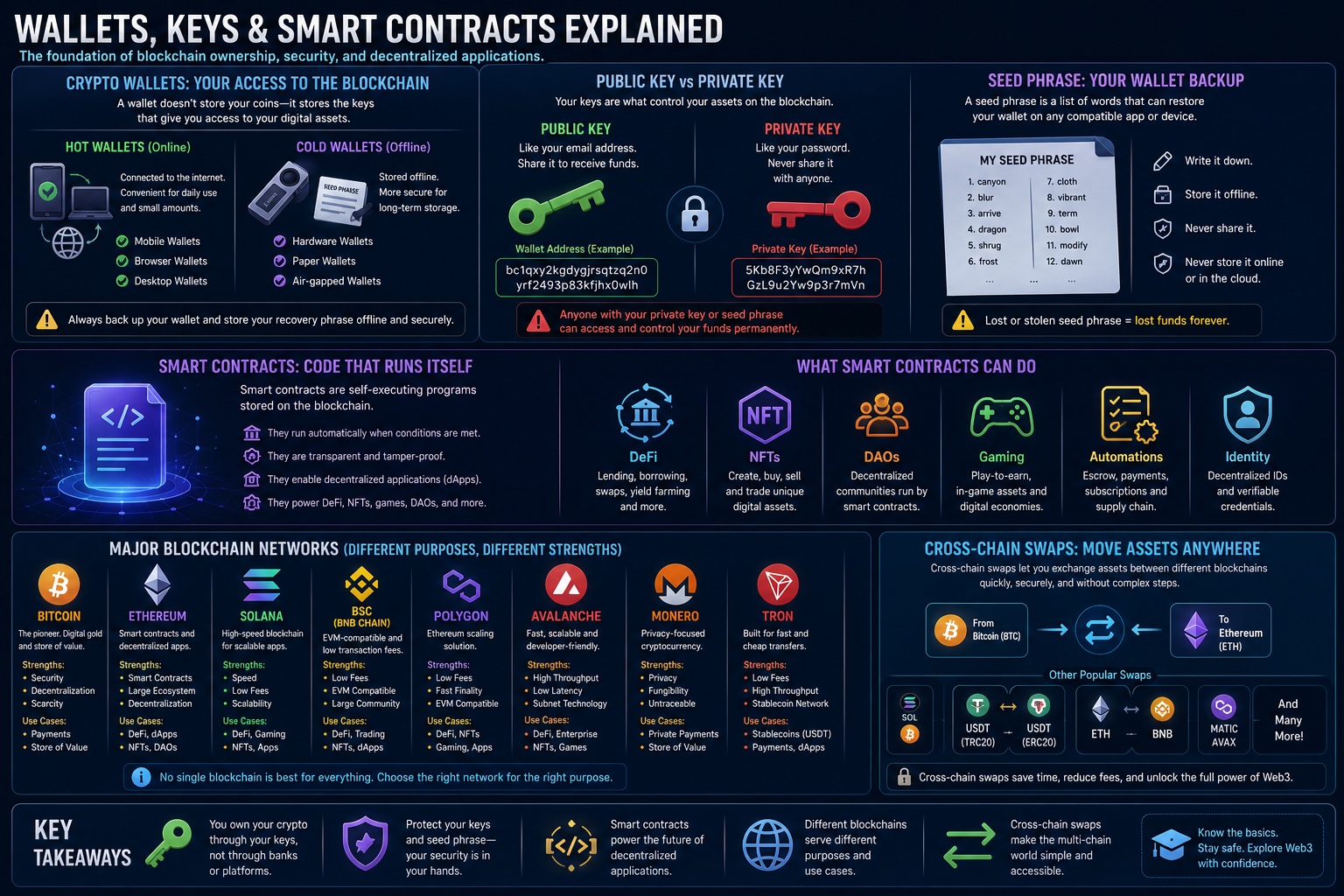
A cryptocurrency wallet allows users to:
- store digital assets,
- send transactions,
- receive funds,
- and interact with blockchain applications.
Unlike traditional wallets, crypto wallets do not technically “hold” coins themselves. Instead, they store cryptographic keys that provide access to blockchain-based assets.
There are two primary wallet categories:
Hot Wallets
Connected to the internet:
- mobile wallets
- browser wallets
- desktop applications
These are convenient but more exposed to cyber threats.
Cold Wallets
Offline storage solutions:
- hardware wallets
- paper backups
- air-gapped devices
These provide stronger security for long-term holdings.
Understanding wallet security is one of the most important aspects of safely using cryptocurrency.
Public Keys and Private Keys Explained
Blockchain wallets rely on two important components:
- public keys
- private keys
A public key functions similarly to an account address. Users can share it to receive cryptocurrency.
A private key, however, acts like the password controlling the wallet.
Anyone with access to the private key or seed phrase can control the associated funds permanently.
This is why users should never share:
- seed phrases,
- private keys,
- or wallet recovery credentials.
Maintaining control over private keys is central to the concept of self-custody in crypto.
What Are Smart Contracts?
Some blockchains, such as Ethereum, support programmable applications known as smart contracts.
Smart contracts are self-executing programs stored directly on the blockchain.
They automatically perform actions when predefined conditions are met.
Smart contracts enable:
- decentralized exchanges,
- lending platforms,
- NFT marketplaces,
- staking systems,
- blockchain games,
- and many other decentralized applications.
These applications form the foundation of the broader Web3 ecosystem.
Different Blockchain Networks Serve Different Purposes
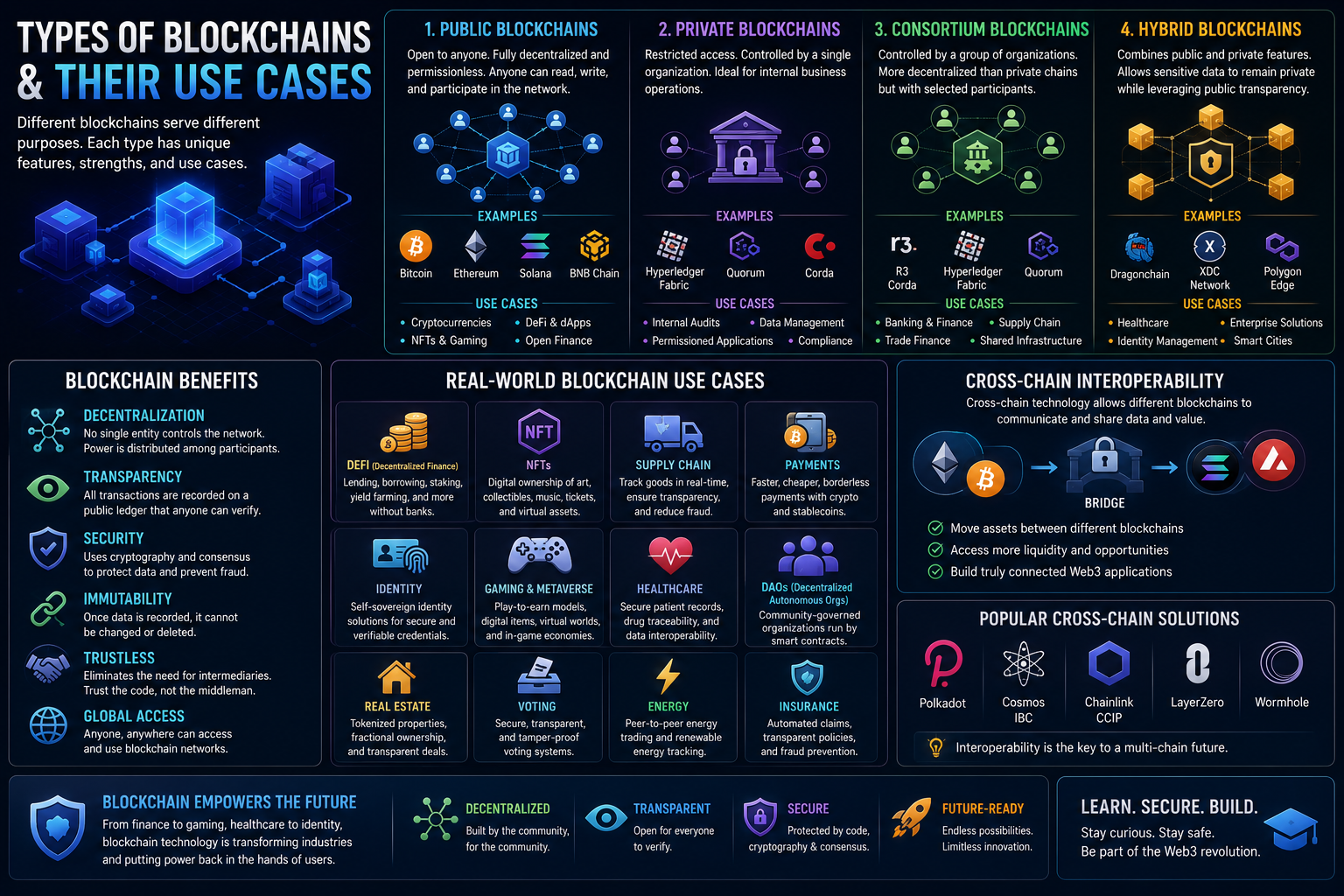
There is no single “best” blockchain.
Different networks prioritize different features.
Bitcoin
Primarily focused on:
- security,
- decentralization,
- and digital scarcity.
Ethereum
Focused on:
- smart contracts,
- decentralized applications,
- and token ecosystems.
Solana
Optimized for:
- speed,
- scalability,
- and lower transaction costs.
Monero
Designed for:
- transactional privacy,
- anonymity,
- and confidential transfers.
Stablecoin Networks
Networks like Tron and Ethereum are heavily used for stablecoin transfers involving:
- USDT,
- USDC,
- and cross-border payments.
Because blockchain ecosystems vary significantly, users often need tools capable of moving assets between networks.
What Are Cross-Chain Swaps?
As crypto becomes increasingly multi-chain, users frequently need to convert assets between different blockchain ecosystems.
Examples include:
- BTC → ETH
- ETH → XMR
- SOL → BTC
- TRC20 USDT → ERC20 USDT
Cross-chain swap platforms simplify these conversions.
Instead of manually:
- using exchanges,
- managing bridges,
- or navigating multiple wallets,
users can swap assets more directly across blockchain networks.
Platforms such as BitSwapNow help users perform secure cross-chain swaps between hundreds of digital assets while simplifying blockchain compatibility.
Educational resources like:
BitSwapNow Guides
also help newer users better understand:
- blockchain networks,
- crypto wallets,
- stablecoin standards,
- and secure crypto transactions.
Blockchain Security and Transparency
Blockchain networks are often considered secure because transaction records are:
- distributed,
- cryptographically verified,
- and publicly auditable.
However, blockchain technology itself is only one part of crypto security.
Users still need to protect:
- wallets,
- private keys,
- devices,
- and online accounts.
Many crypto losses occur through:
- phishing scams,
- fake websites,
- wallet drainers,
- or social engineering attacks
rather than flaws in blockchain technology itself.
Understanding blockchain basics helps users identify risks more effectively and avoid common mistakes.
Why Blockchain Adoption Continues Growing
Blockchain technology continues expanding because it solves real problems related to:
- ownership,
- value transfer,
- transparency,
- and global accessibility.
Industries exploring blockchain include:
- finance,
- gaming,
- supply chains,
- digital identity,
- tokenization,
- and online commerce.
At the same time, decentralized systems continue attracting users interested in:
- self-custody,
- censorship resistance,
- privacy,
- and open financial infrastructure.
As blockchain tools become easier to use, adoption will likely continue accelerating worldwide.
Final Thoughts
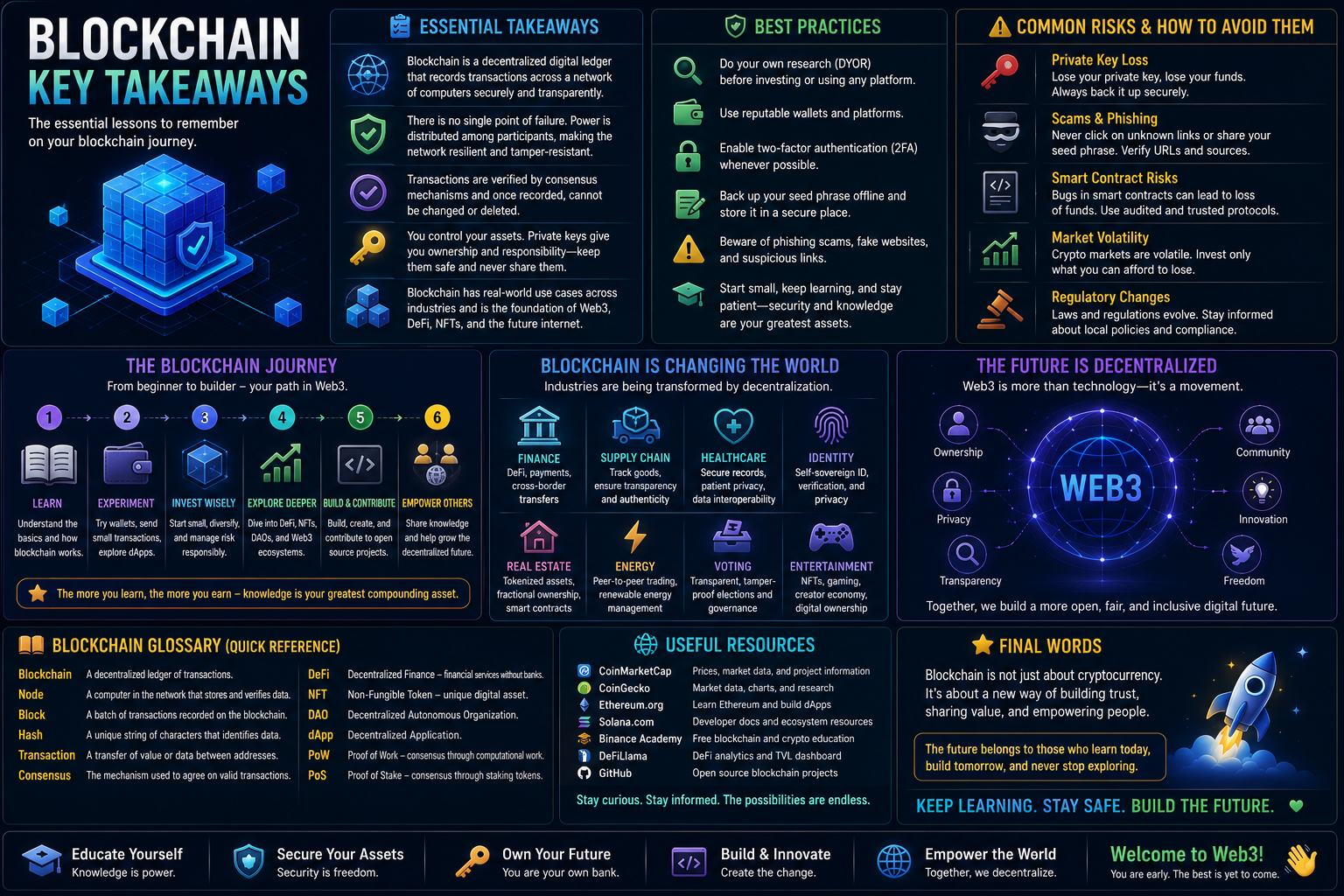
Blockchain technology may seem complex initially, but its core concept is relatively straightforward:
a decentralized system for securely recording and transferring digital value.
Understanding blockchain basics helps users:
- navigate crypto more safely,
- understand wallets and networks,
- avoid common mistakes,
- and participate more confidently in the evolving Web3 ecosystem.
As cryptocurrencies, decentralized finance, stablecoins, and cross-chain infrastructure continue growing, blockchain education is becoming increasingly important for both beginners and experienced users alike.
Last updated: