



Cryptocurrency gives users complete control over their money — but with that freedom comes responsibility. Unlike traditional banks, crypto transactions are usually irreversible, and there is often no customer support team capable of recovering lost funds.
In 2026, crypto scams, phishing attacks, wallet drainers, fake apps, and malicious smart contracts continue targeting both beginners and experienced investors alike.
This guide explains how to protect your cryptocurrency, secure your wallets, avoid common scams, and safely navigate the digital asset ecosystem.
Why Crypto Security Matters
In traditional finance:
- banks can reverse transactions
- accounts may be recoverable
- fraud departments exist
In crypto:
- transactions are permanent
- private keys control ownership
- stolen funds are often unrecoverable
This makes security one of the most important skills in cryptocurrency.
A single mistake can result in:
- stolen assets
- compromised wallets
- drained accounts
- identity theft
- permanent financial loss
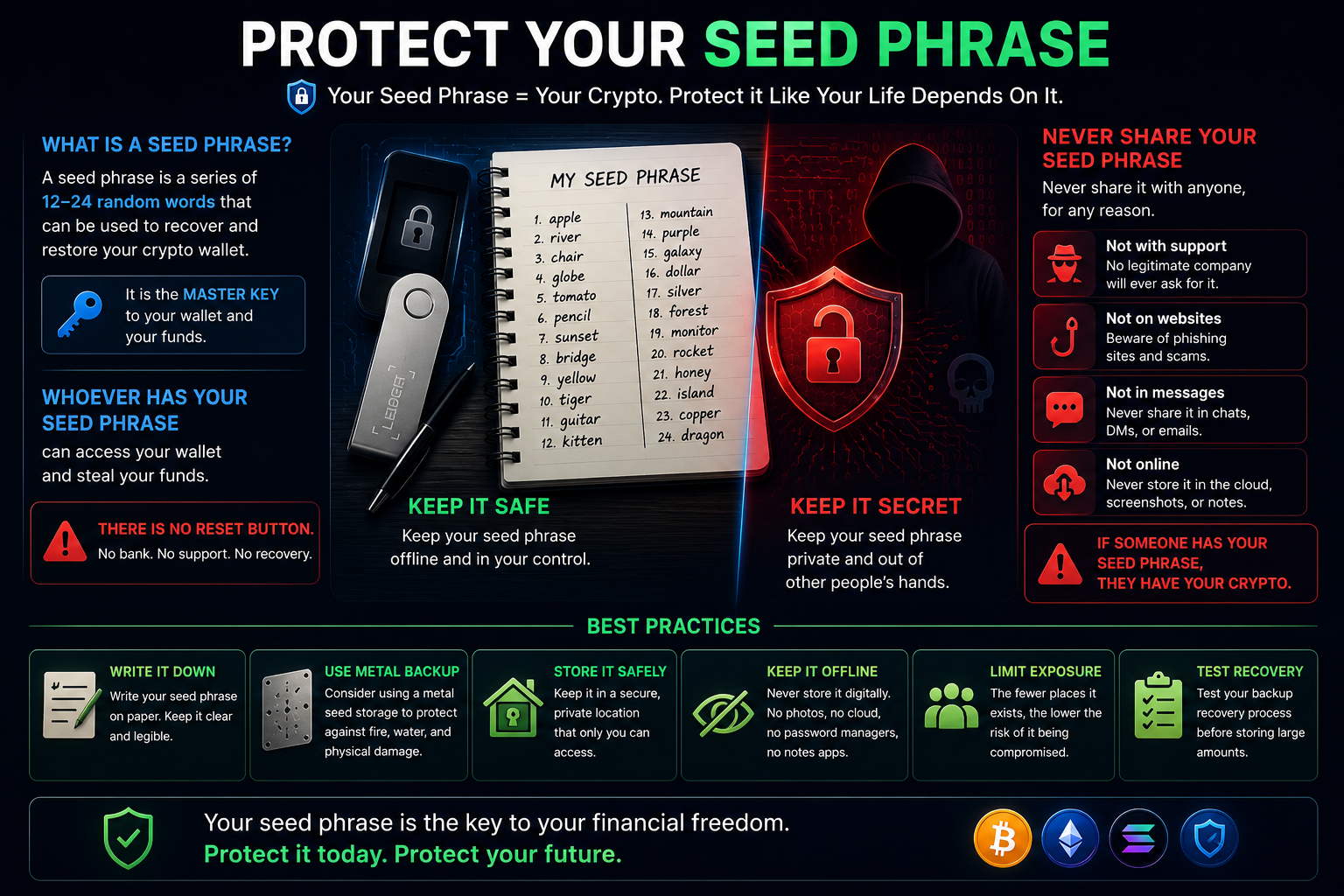
Understanding Private Keys & Seed Phrases
What Is a Private Key?
A private key is the cryptographic code that gives access to your cryptocurrency.
Whoever controls the private key controls the funds.
What Is a Seed Phrase?
A seed phrase (also called a recovery phrase) is typically:
12–24 random wordsused to recover your wallet.
Example:
apple river chair globe sunset...Your seed phrase is the MASTER KEY to your crypto.
Golden Rule of Crypto Security
NEVER SHARE:
- seed phrases
- private keys
- wallet backups
- recovery codes
No legitimate company, wallet, exchange, or support team will ever ask for them.
Types of Crypto Wallets
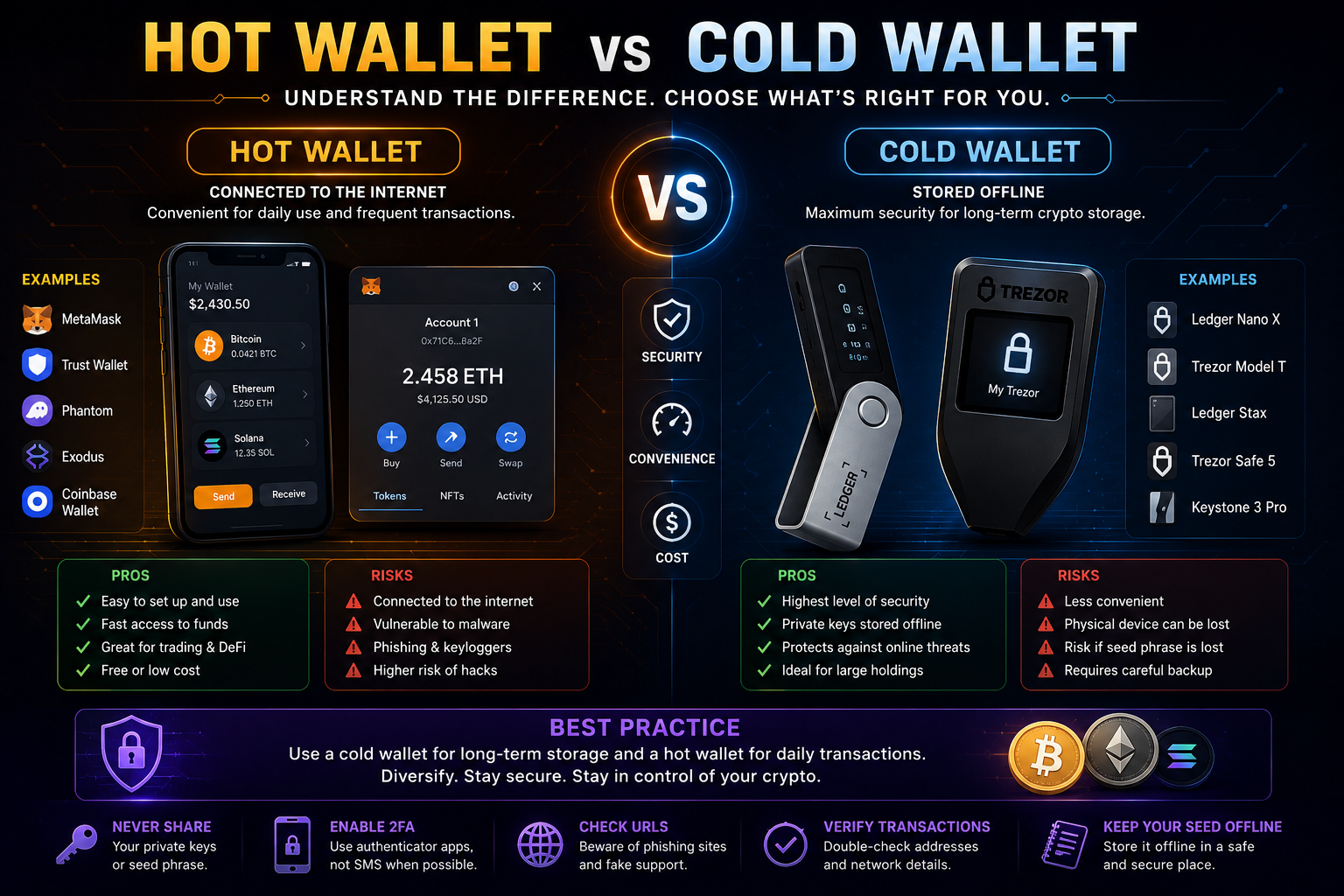
Hot Wallets
Connected to the internet.
Examples:
- MetaMask
- Trust Wallet
- Phantom
- Exodus
Pros
- convenient
- fast access
- easy for trading
Risks
- malware
- phishing
- browser exploits
- wallet drainers
Cold Wallets (Hardware Wallets)
Offline physical devices.
Examples:
- Ledger
- Trezor
- Keystone
Pros
- highest security
- offline storage
- protection from malware
Risks
- losing recovery phrase
- buying fake devices
- physical theft
For long-term holdings, hardware wallets are strongly recommended.
How To Secure Your Crypto Wallet
Use Strong Passwords
Avoid:
- reused passwords
- simple phrases
- predictable combinations
Use:
- password managers
- long random passwords
- unique credentials
Enable 2FA
Always enable:
Two-Factor Authentication (2FA)Prefer:
- authenticator apps
- hardware keys
Avoid:
SMS-based 2FAwhen possible.
Store Seed Phrases Offline
Best practices:
- write on paper
- use metal seed backups
- store in secure physical locations
Avoid:
- screenshots
- cloud storage
- email backups
- phone notes
Common Crypto Scams
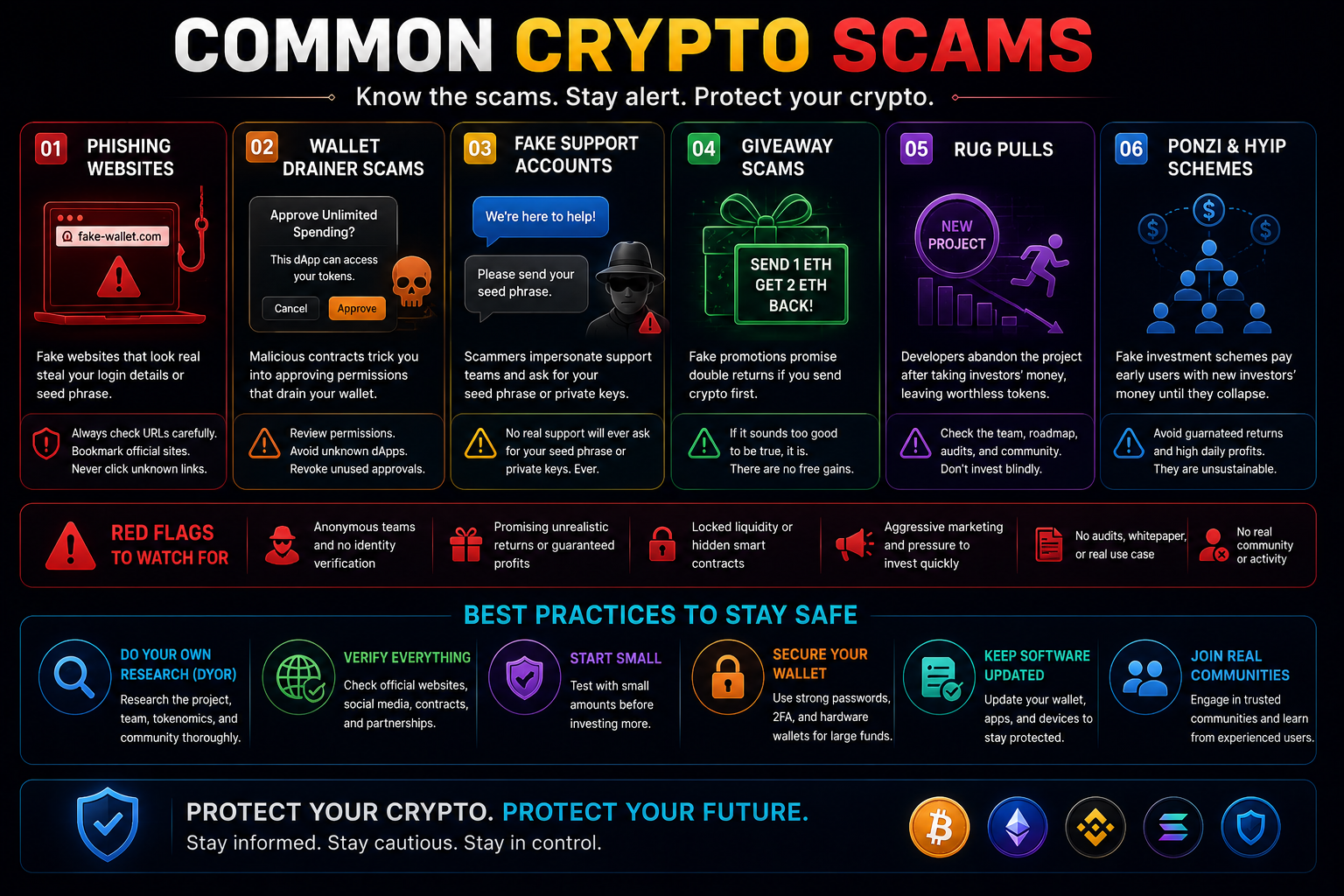
Phishing Websites
Fake websites designed to steal wallet credentials.
Always:
- verify URLs carefully
- bookmark official sites
- avoid clicking suspicious links
Wallet Drainer Scams
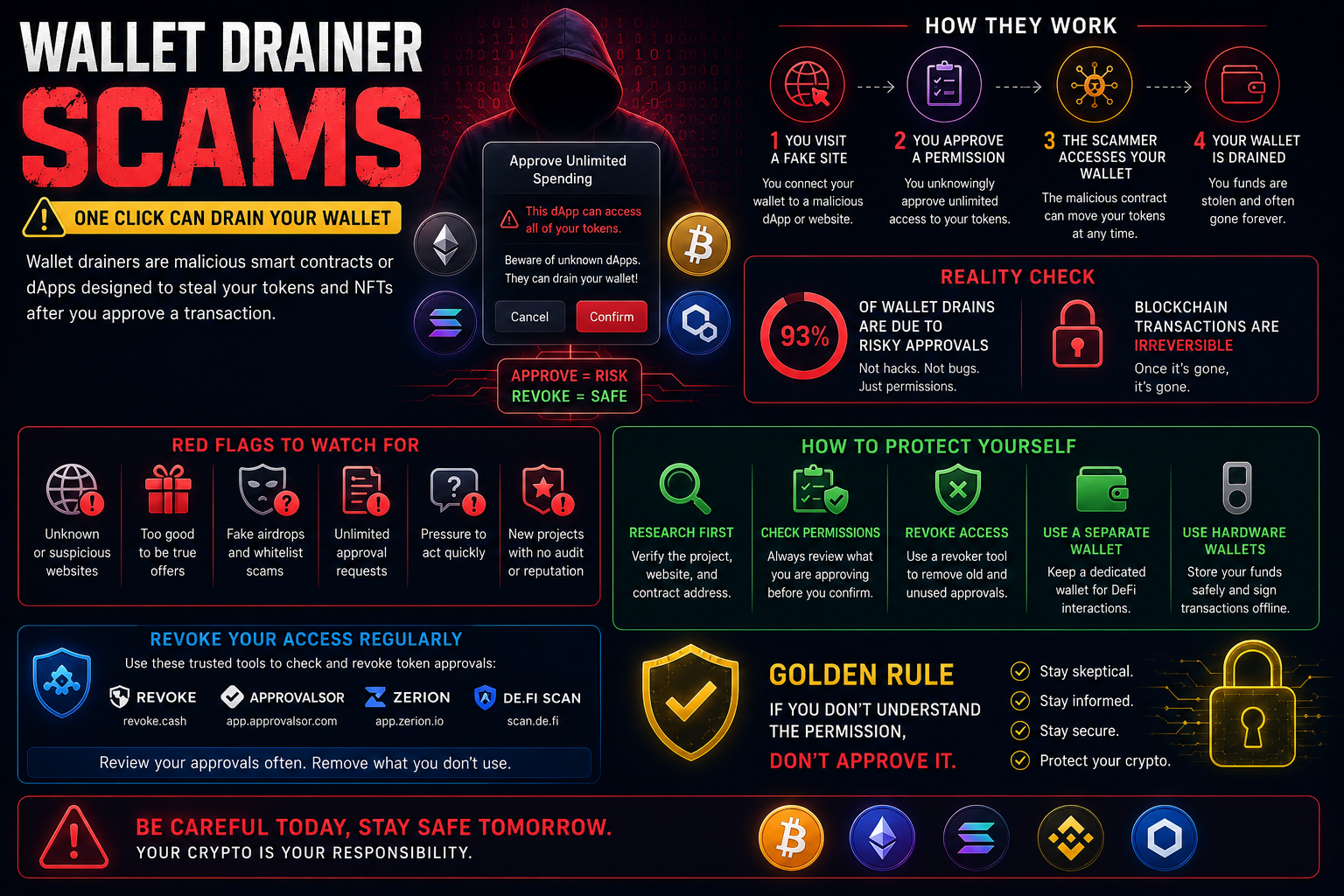
Malicious smart contracts that drain wallet funds after approval.
Always:
- review wallet permissions
- avoid unknown dApps
- revoke unused approvals
Fake Support Accounts
Scammers pretending to be:
- wallet support
- exchange staff
- crypto influencers
Remember:
- legitimate support will never ask for your seed phrase
Giveaway Scams
Fake promotions claiming:
Send 1 ETH, receive 2 ETH backThese are scams.
Rug Pulls
Developers abandon projects after attracting investor money.
Warning signs:
- anonymous teams
- unrealistic promises
- locked withdrawals
- fake partnerships
How To Avoid Losing Crypto
Double-Check Wallet Addresses
Crypto transactions are irreversible.
Always:
- verify first/last characters
- confirm blockchain network
- use test transactions
Verify Blockchain Networks
Mistakes like:
Sending ERC20 to BEP20can result in permanent loss.
Avoid Public Wi-Fi
Public networks increase:
- hacking risk
- man-in-the-middle attacks
- malware exposure
Use:
- VPNs
- trusted home connections
Keep Devices Updated
Update:
- browsers
- wallets
- operating systems
- antivirus software
Security patches matter.
Smart Contract Safety
Before connecting wallets:
- research protocols
- verify official links
- check audits
- understand permissions requested
Be cautious with:
- unlimited token approvals
- unknown contracts
- brand-new projects
Best Practices for Hardware Wallets
Buy Directly From Official Sources
Avoid:
- eBay
- Facebook Marketplace
- third-party resellers
Tampered devices exist.
Test Recovery Process
Before storing large funds:
- test wallet recovery
- verify backup phrase accuracy
Use Multiple Wallets
Many advanced users separate:
- long-term storage
- trading wallets
- DeFi wallets
- NFT wallets
This limits exposure.
Social Engineering Attacks
Sometimes the biggest threat is not technology — it’s manipulation.
Scammers may:
- impersonate friends
- create urgency
- offer fake investments
- promise guaranteed profits
Never rush financial decisions.
Browser & Extension Security
Browser wallets are common targets.
Best practices:
- remove unused extensions
- use separate crypto browsers
- avoid random downloads
- verify extension publishers
Crypto Security Checklist
Essential Security Steps
Wallet Security
- Use hardware wallets for large holdings
- Backup seed phrases offline
- Never share private keys
Account Security
- Enable 2FA
- Use strong passwords
- Monitor login activity
Transaction Safety
- Verify wallet addresses
- Start with small test transfers
- Check blockchain networks carefully
Scam Prevention
- Avoid suspicious links
- Ignore “guaranteed profit” offers
- Verify official websites
What To Do If Your Wallet Is Compromised
If you suspect compromise:
Immediately:
- Move remaining funds
- Revoke smart contract approvals
- Disconnect suspicious dApps
- Create a new wallet
- Transfer assets securely
Time matters.
Are Crypto Transactions Anonymous?
Not completely.
Most blockchains are:
- public
- traceable
- permanently recorded
Blockchain analytics tools can often track transaction history.
Privacy-focused coins like:
- Monero (XMR)
offer enhanced privacy features.
Final Thoughts
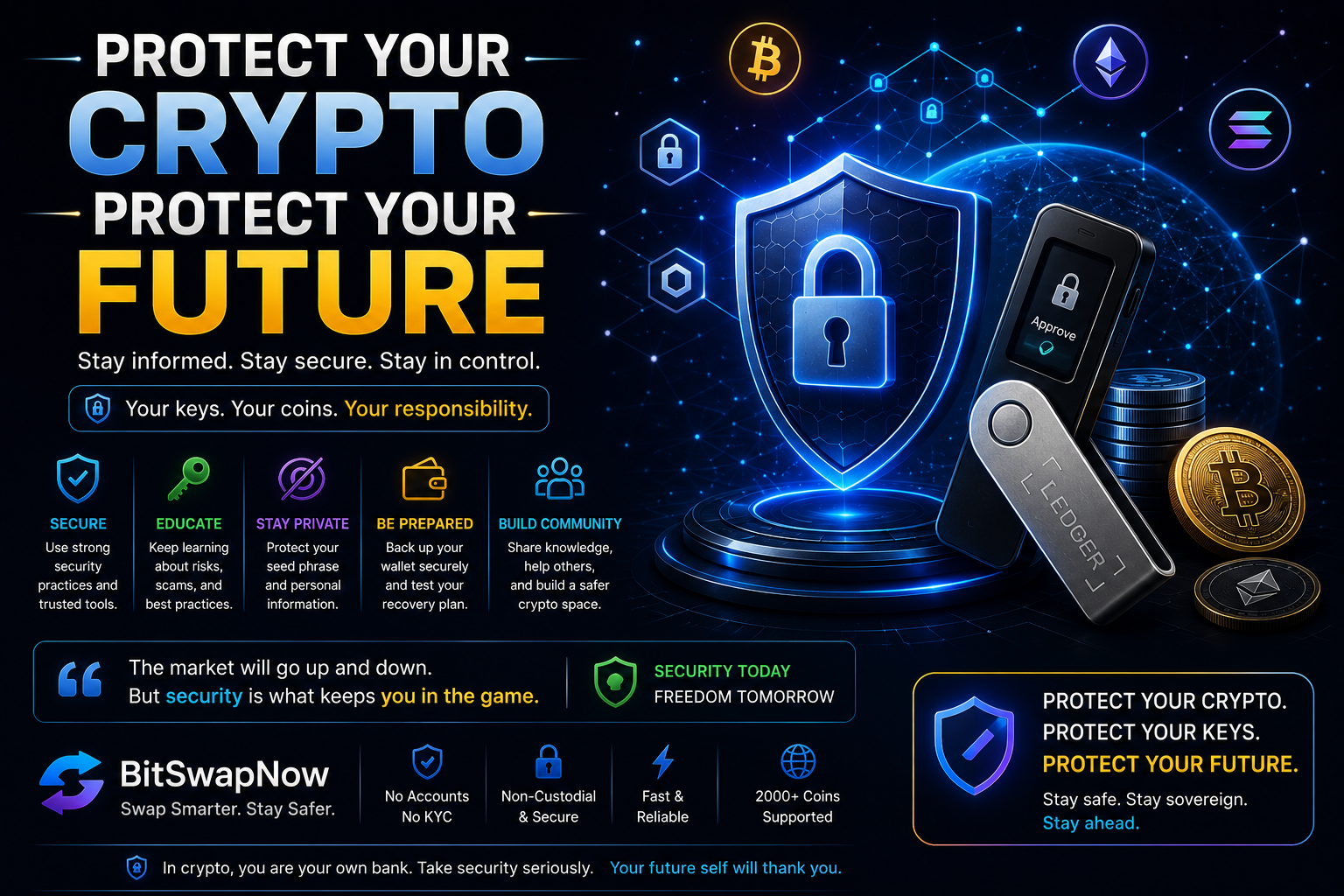
Crypto security is not optional — it is essential.
The decentralized nature of cryptocurrency gives users financial freedom, but also places full responsibility on the individual.
By understanding:
- wallet security
- phishing prevention
- seed phrase protection
- smart contract safety
- scam awareness
you dramatically reduce the risk of losing digital assets.
In crypto, security habits are often the difference between protecting your wealth and losing it permanently.
Related Guides
- What Is a Non-Custodial Wallet?
- How Crypto Swaps Work
- Best Crypto Wallets for Beginners
- How To Avoid Crypto Scams
- What Is Blockchain Technology?
Last updated: